GO
Green flag
Often used for lower hazard conditions, though swimmers should still use caution.
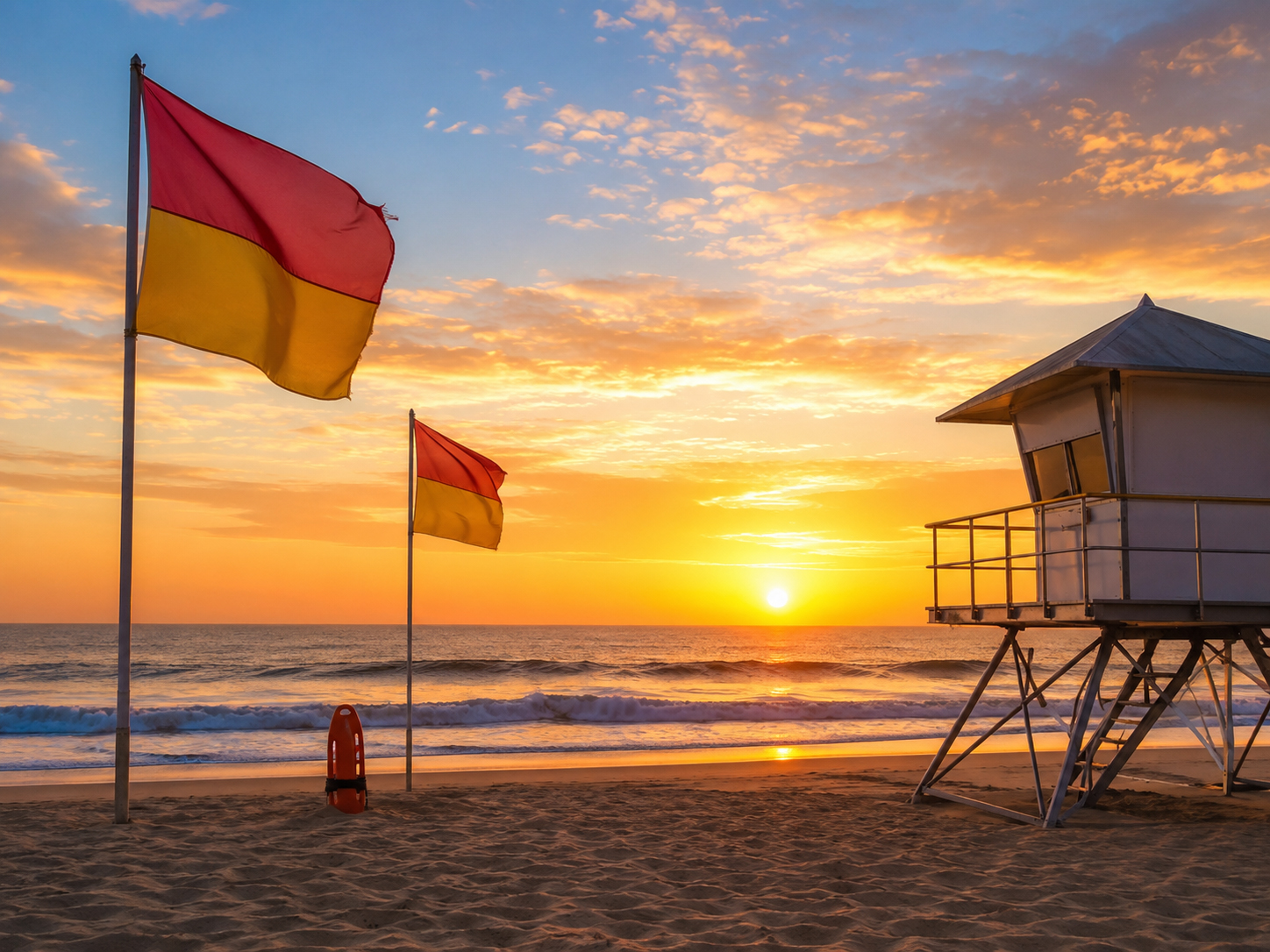
Beach safety flags turn ocean conditions into public language. Surf, currents, marine life, closures, and hazards can change fast. The flag gives everyone on the sand a visual warning before they enter the water.
Ocean conditions
People arrive at beaches relaxed, excited, distracted, and often unfamiliar with local conditions. A safety flag gives lifeguards and beach managers a fast public way to communicate risk.
Colors and meanings vary by beach authority, so posted local signs should always be followed. The general idea is simple: look at the flag before entering the water, and treat the ocean with respect.
Often used for lower hazard conditions, though swimmers should still use caution.
Moderate surf, current, or general caution depending on local rules.
High hazard conditions such as strong surf or dangerous currents.
Often means water is closed to the public. Stay out and follow posted rules.
Often warns of dangerous marine life, such as jellyfish or other ocean pests.
May mark surfboard, watercraft, or swimming zones depending on local systems.
May be used for special local warnings, visibility, events, or beach-specific hazards.
Always read local signage because meanings can vary by city, county, or country.
Safety note: this page is educational only. Beach flag meanings vary by location. Always follow posted signs, lifeguard instructions, and local beach authority rules.
Why they matter
Rip currents, shorebreak, surf height, jellyfish, offshore wind, storm surge, and closed-water conditions are not always obvious to visitors. A beach flag turns local knowledge into a public signal.
Flags can warn when currents make swimming more dangerous than the surface appears.
Large waves and shorebreak can make entry, exit, and swimming dangerous.
Some systems warn about jellyfish, stingrays, or other dangerous marine life.
Closure flags help make “do not enter” conditions clear across a wide beach.
Flags can help separate swimming, surfing, watercraft, event, and restricted areas.
A flag communicates to everyone at once, even when noise and distance make speech impossible.
A simple public interface
The best beach safety systems are highly visible and easy to understand. A visitor should not need a lecture before noticing that conditions have changed.
Flags, signs, lifeguard towers, and clear public messaging work together. The flag is the part that moves in the wind and catches the eye.
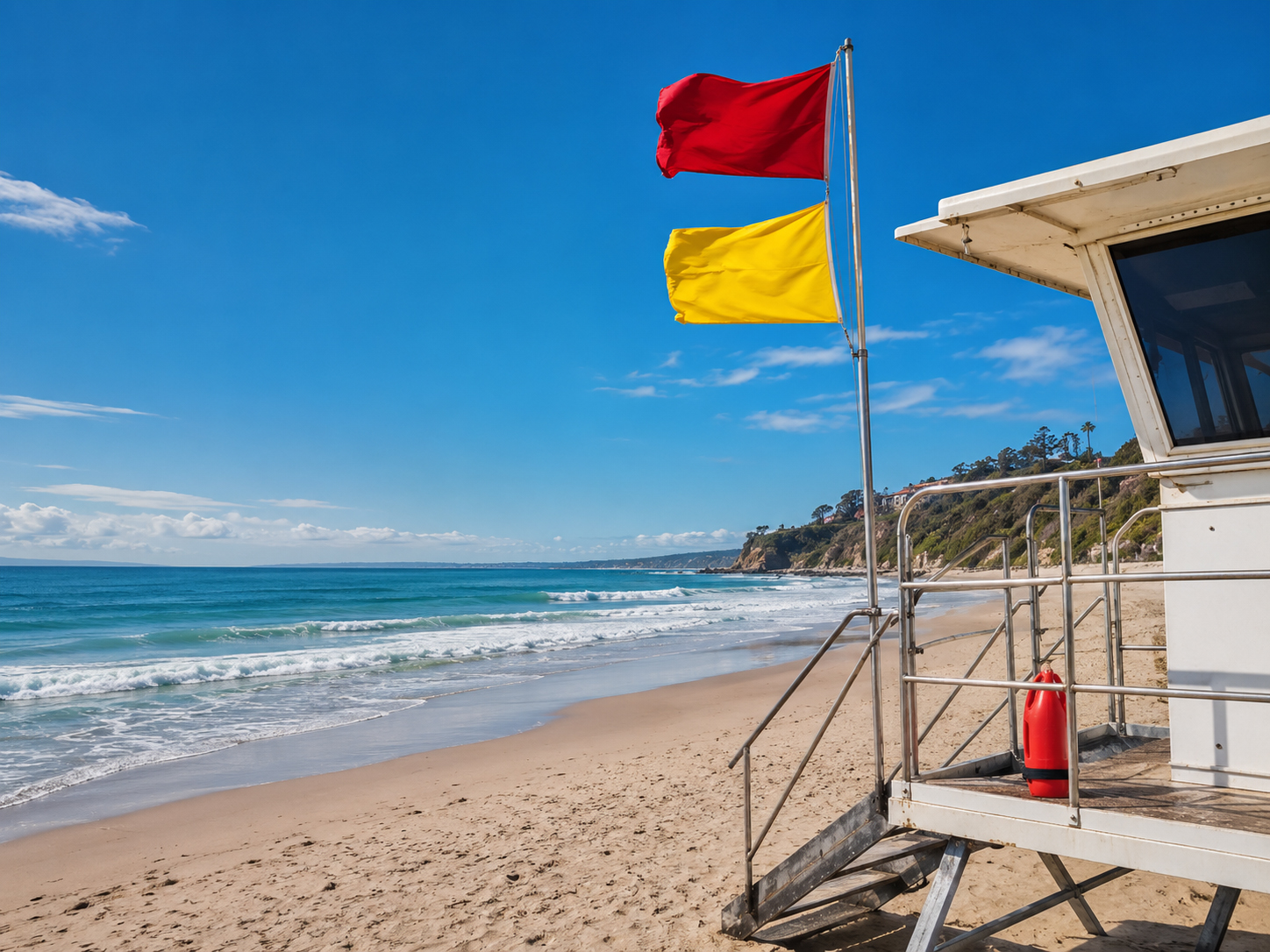
SolarFlag.com
They are not background color. They are public safety signals. Look first, read the local sign, and respect the water.