Solar powered
Useful when trenching power to a flagpole is costly, ugly, or inconvenient.
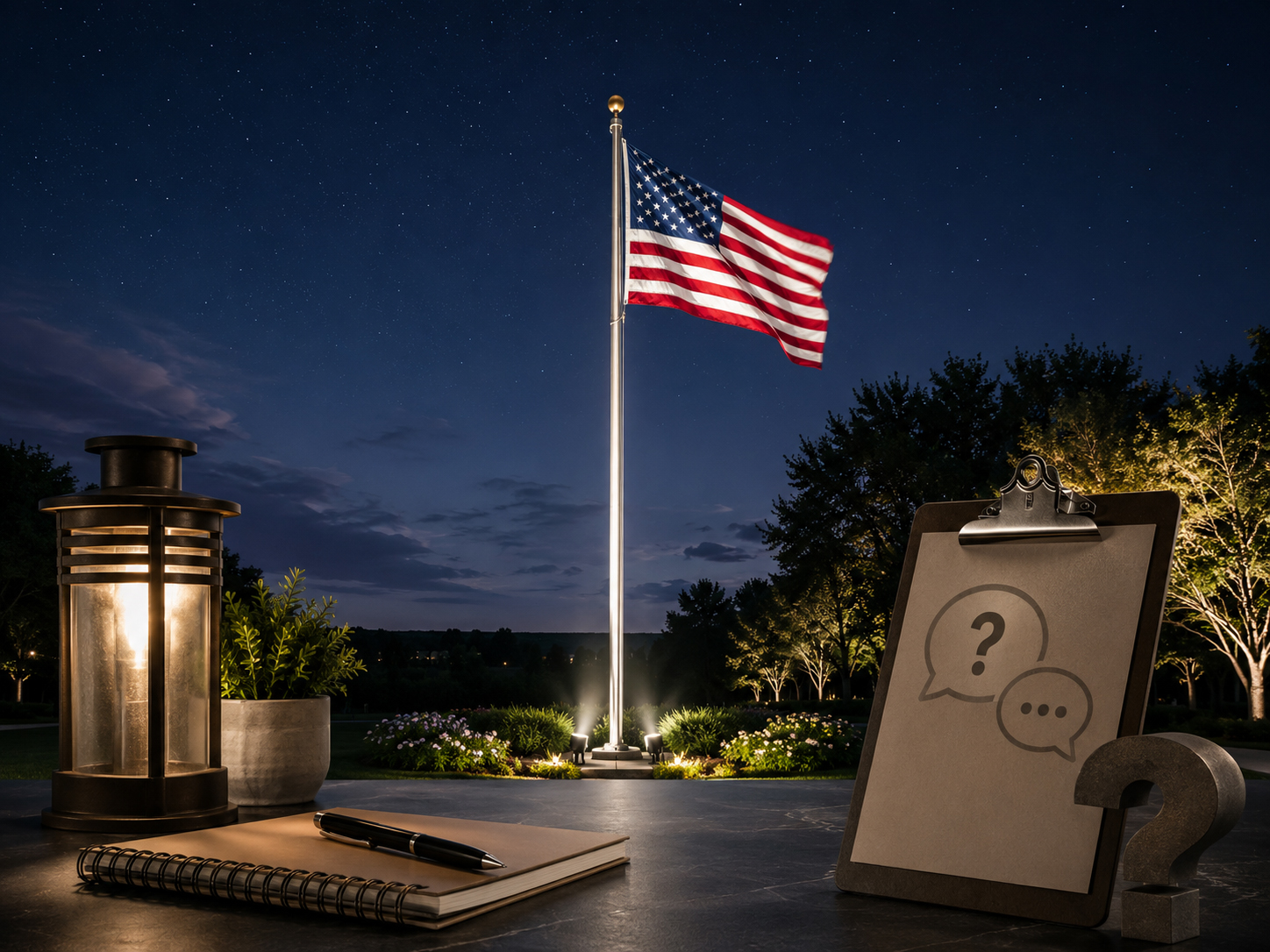
Solar flag lighting is practical, patriotic, educational, and design-sensitive. The main idea is simple: if the flag flies at night, it should be visible with dignity.
Fast answers
A good system collects sunlight during the day, stores it in a battery, and uses an efficient fixture to illuminate the flag after sunset. The key is not just brightness. The key is proper aim, enough battery reserve, and respectful appearance.
Useful when trenching power to a flagpole is costly, ugly, or inconvenient.
Daytime solar charging becomes nighttime flag visibility through stored energy.
The light should serve the flag, not blast the property or create glare.
FAQ
These answers are general and educational. Site conditions, pole height, flag size, local rules, and available sunlight can change the right design.
Yes. A flag displayed outdoors at night should be visible. SolarFlag.com is built around that simple principle: if the flag is important enough to fly after sunset, it is important enough to light properly.
A solar panel charges a battery during the day. At dusk, a sensor or timer turns on an LED fixture. The fixture should be aimed to illuminate the flag surface without unnecessary glare.
Yes, especially where the flagpole is away from an existing electrical source. A clean solar design can avoid trenching while still keeping the flag visible after dark.
Yes. Businesses, schools, churches, city buildings, fire stations, and civic sites often have flagpoles in visible public locations. Lighting helps preserve nighttime presence and respect.
The important factors are pole height, flag size, beam angle, solar exposure, battery reserve, fixture placement, glare control, and maintenance access. Design from the flag backward.
It depends on the panel, battery, fixture wattage, weather, shading, and night length. Winter nights and cloudy periods require more reserve. The battery plan matters.
That is one of the strongest reasons to consider solar. Ranch gates, long driveways, memorials, parks, hillsides, and remote flagpoles may be good candidates for off-grid solar flag lighting.
It should not if designed properly. Beam angle and fixture placement matter. The goal is to light the flag, not windows, roads, neighbors, or the whole property.
No. The site covers solar flag lighting, the American flag, state and city flags, flags of the world, flag history, signal flags, weather flags, racing flags, beach safety flags, and flag design.
This patriotic and educational site is brought to you by ABC Solar Incorporated in Torrance, California. The contact information is listed in the footer of every page.
Note: SolarFlag.com is educational and practical, not legal advice. For official flag rules, codes, or local requirements, consult the relevant authority.
SolarFlag.com
ABC Solar can help think through solar exposure, battery needs, beam angle, and practical placement.