STOP
Red flag
Commonly associated with danger, closure, stop, unsafe conditions, or emergency action.
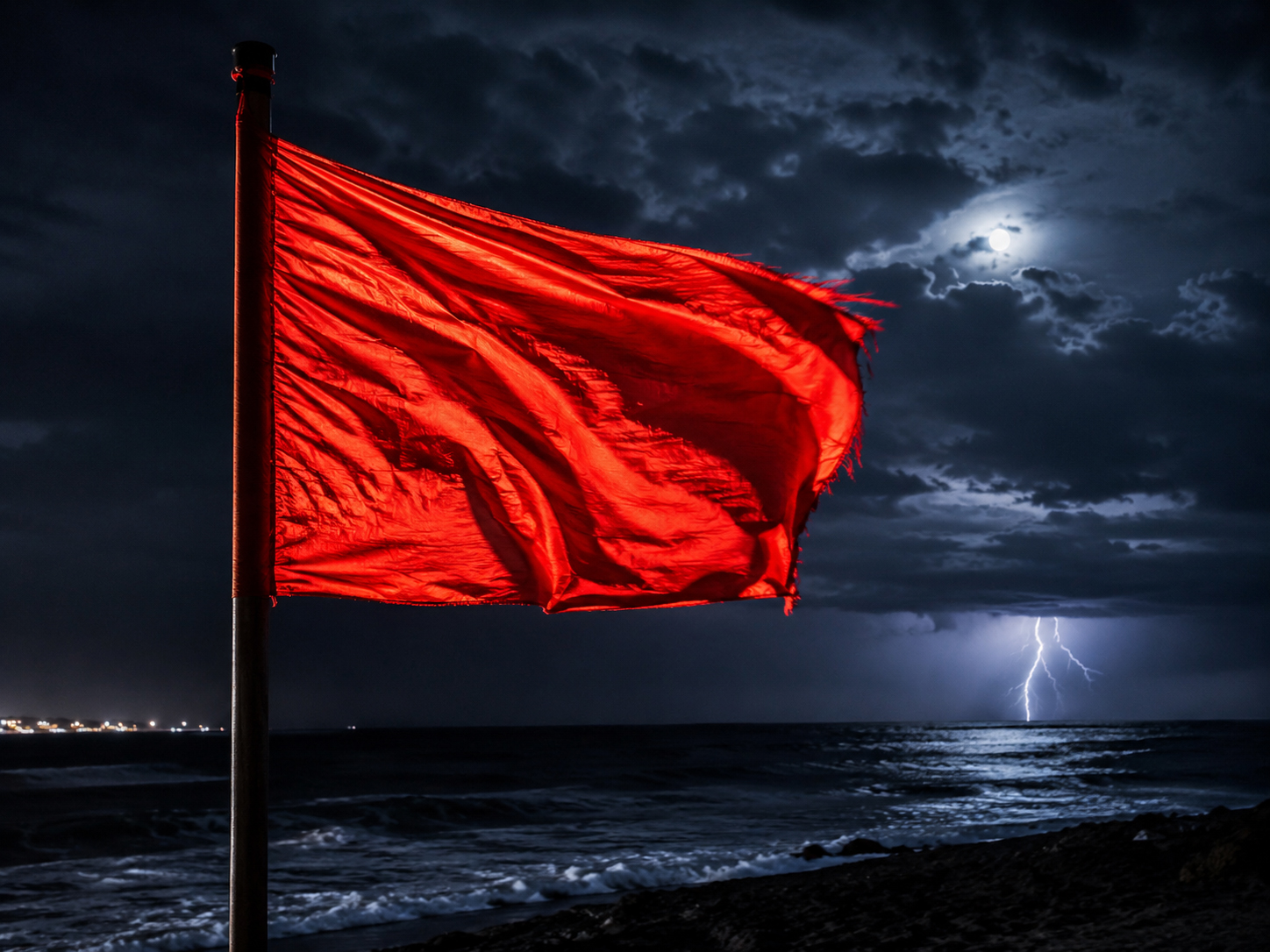
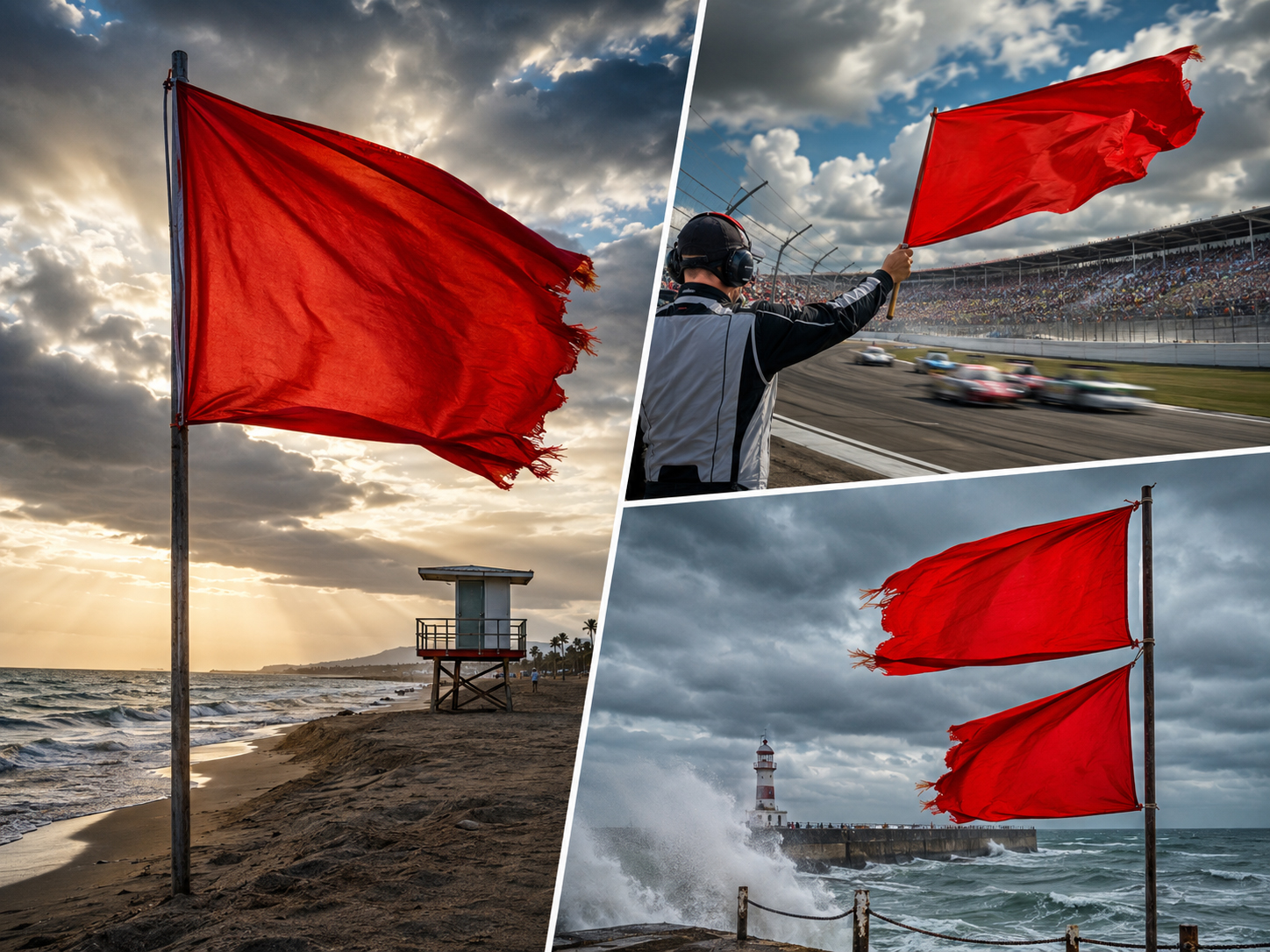
Warning flags turn danger into something visible. Red, yellow, black, purple, storm, beach, racing, maritime, and weather flags all share one purpose: make people notice before it is too late.
Visible danger
Warning flags must be blunt. They are used when the situation demands attention: dangerous surf, severe weather, track hazards, hazardous cargo, restricted activity, closed areas, or emergency conditions.
A warning flag must work at distance, in wind, in bright sun, near water, around noise, and under pressure. That is why warning colors are bold and meanings are repeated.
Commonly associated with danger, closure, stop, unsafe conditions, or emergency action.
Caution: hazard, reduced speed, changing conditions, or need for awareness.
Can signal penalty, restriction, closure, hazardous condition, or official instruction.
Often used in beach systems to indicate water closed to the public.
Often used at beaches to warn about marine pests such as jellyfish.
Can signal heat, caution, construction, visibility, or special hazard depending on context.
In racing, a clear signal of completion; a warning that the session status has changed.
Weather flags have long warned communities about wind, storms, and dangerous conditions.
Why warning flags work
Warning flags work because they do not require private devices, batteries, logins, apps, or sound. They can be seen by everyone in the area at the same time.
A flag can warn people before they are close enough to read a sign.
Racing and traffic-like environments need signals that can be understood instantly.
Flags work where sound is limited by waves, engines, crowds, wind, or machinery.
Everyone sees the same warning at once, reducing confusion and private interpretation.
A flag remains useful when radios, phones, power, or screens are unavailable.
Warning flags show that a condition has been officially noticed and communicated.
Clarity saves time
A warning flag does not try to be subtle. It has to be seen. It has to be believed. It has to make people change behavior quickly.
That makes warning flags one of the purest forms of flag design: color, motion, authority, and meaning in the open air.
SolarFlag.com
Whether on a beach, racetrack, ship, worksite, or storm station, a warning flag carries responsibility. Visibility is the whole point.