A
Alpha
A classic maritime signal flag, often associated with “diver down; keep clear.”
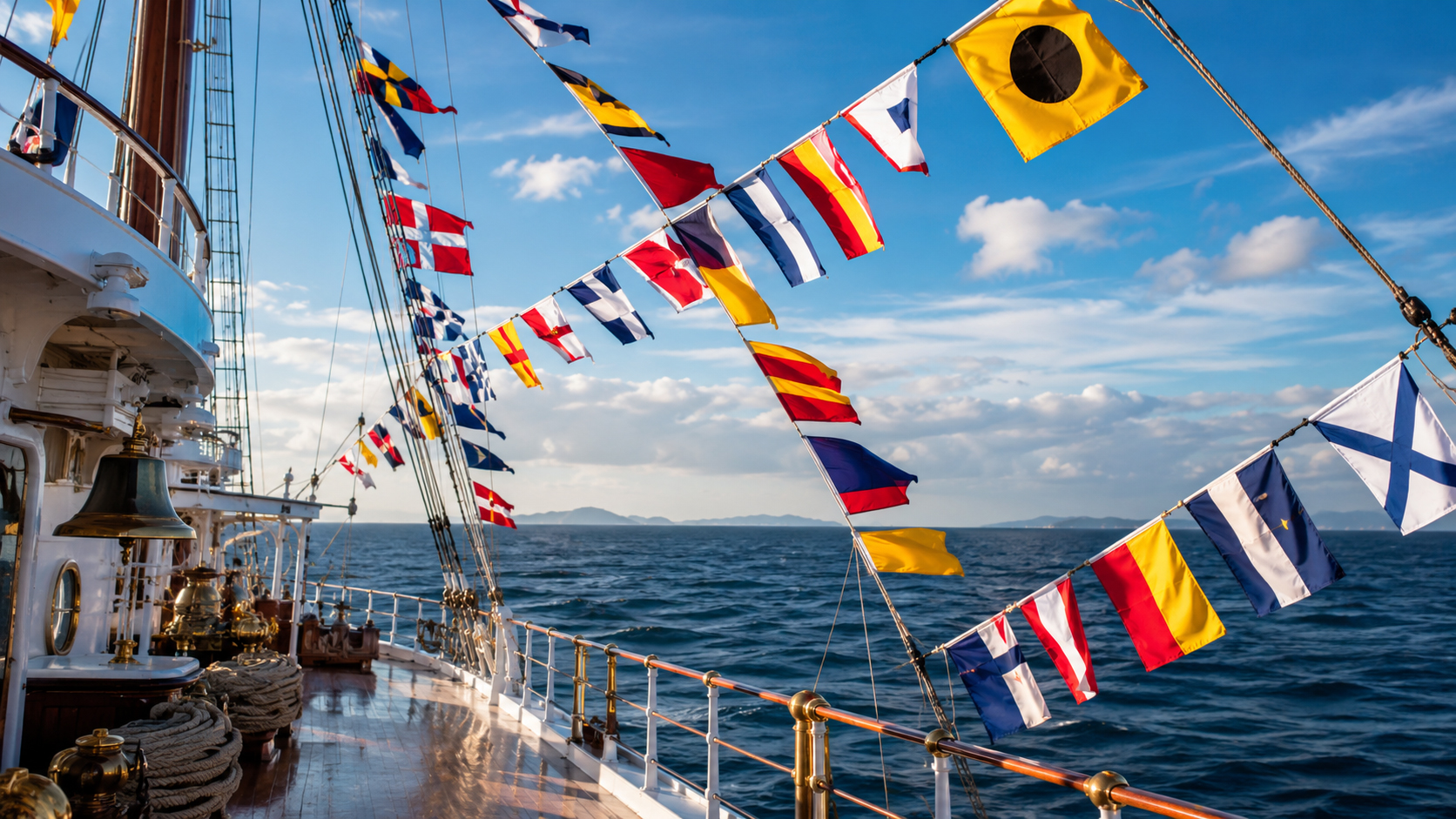
Maritime signal flags are the sea’s visual alphabet: bold blocks of color, geometric shapes, and coded combinations that helped vessels identify, warn, request, report, and communicate across distance.
The language of ships
On land, a person can walk closer to ask a question. At sea, distance is harder. Ships needed ways to communicate across water, through wind, motion, glare, and uncertainty. Signal flags solved part of that problem with bold visual code.
A single flag may represent a letter, a number, or a specific message. A hoist of several flags can create a coded communication. The system is functional, colorful, and beautiful because it has to be readable.
A classic maritime signal flag, often associated with “diver down; keep clear.”
A red signal flag associated with dangerous cargo or related cautionary status.
Signal flags can act as letters and also carry standardized code meanings.
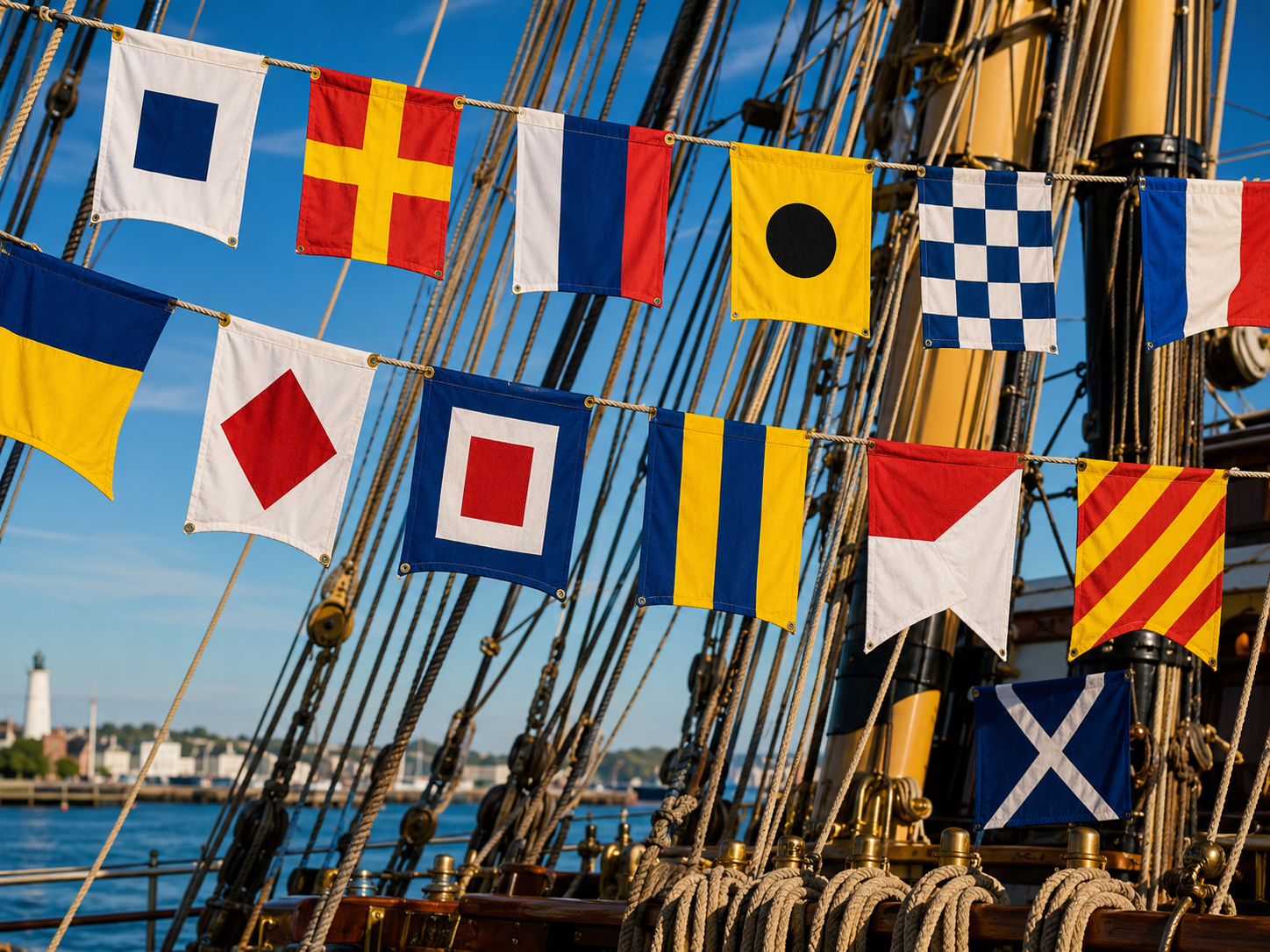
Bold patterns help flags remain readable on water, in motion, and at distance.
Simple color divisions can communicate quickly when words would be too slow.
High contrast makes maritime code flags useful in bright light and changing weather.
The yellow “Q” flag is famously associated with quarantine and clearance traditions.
Stripes and diagonals keep the visual alphabet distinct and memorable.
Why maritime flags matter
Maritime signal flags are not subtle because subtle signals fail. Their patterns are strong because they need to be seen through glare, spray, distance, motion, and urgency.
Flags help ships identify themselves, their status, and their intentions.
Signal flags can warn other vessels about danger, restrictions, or special operations.
Individual flags and combinations can represent letters, numbers, and standardized messages.
Signal flags are also used to dress ships and create formal maritime display.
At sea, visual symbols need to work across water before people can speak directly.
Even in the radio age, maritime flags remain part of nautical culture and seamanship.
Function becomes beauty
Signal flags use strong shapes because the sea punishes weak design. The wind folds fabric. Sunlight washes out color. Distance steals detail. Good maritime flags survive all of that.
They teach a larger lesson about flags: clarity is not the enemy of beauty. Clarity is often what makes a flag beautiful.
SolarFlag.com
Maritime signal flags prove that color and cloth can become language. They are design, code, warning, identity, and tradition moving in the wind.