1
Visible flag
The flag should be recognizable and visible during nighttime display.
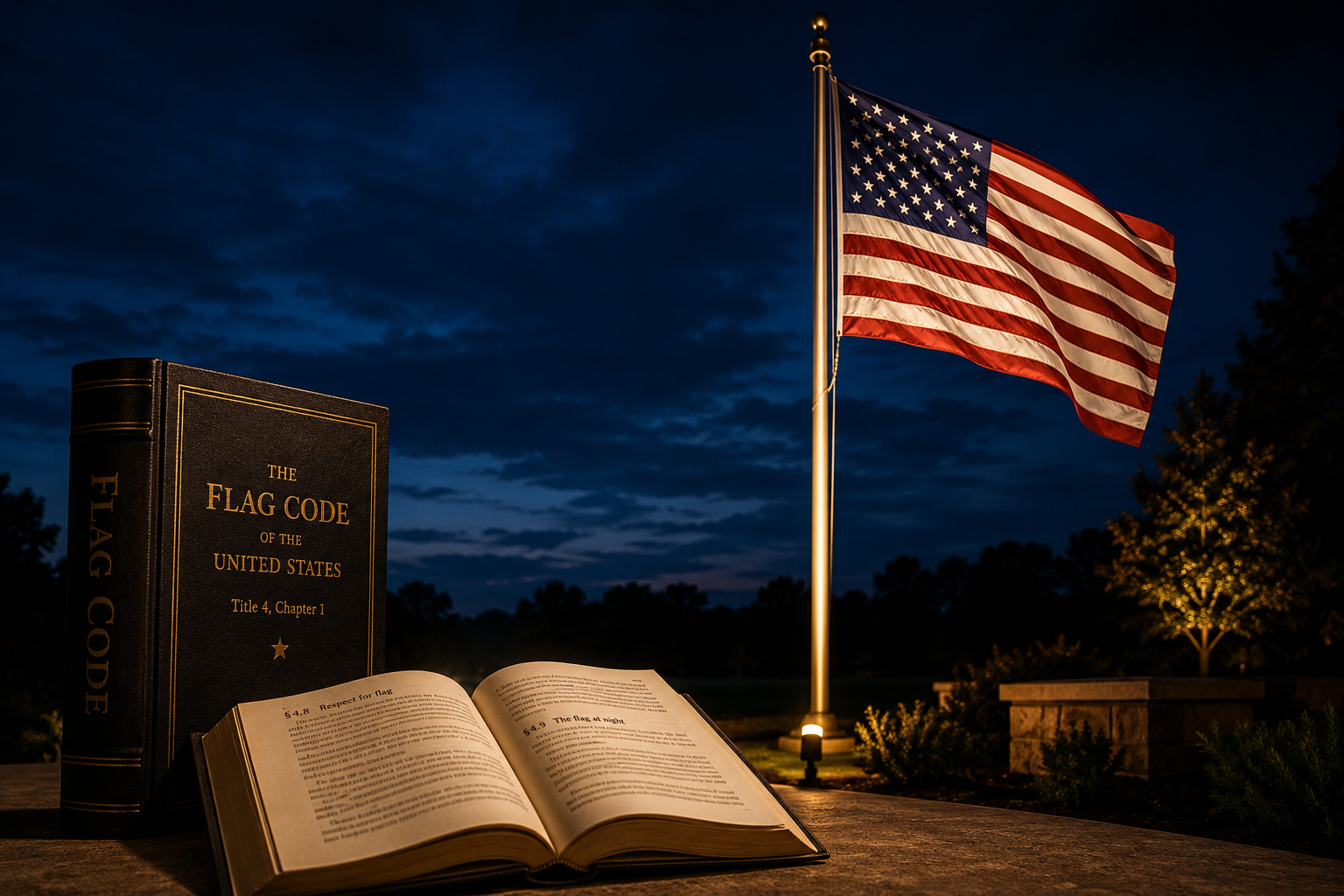
The U.S. Flag Code gives a simple nighttime rule of respect: a flag may be displayed twenty-four hours a day when a patriotic effect is desired, if it is properly illuminated during the hours of darkness.
The rule
The U.S. Flag Code, 4 U.S.C. § 6, states that it is the universal custom to display the flag only from sunrise to sunset on buildings and stationary flagstaffs in the open. It also allows 24-hour display when a patriotic effect is desired, provided the flag is properly illuminated during darkness. Read 4 U.S.C. § 6
SolarFlag.com is not a law firm and this page is not legal advice. It is a practical, plain-language guide for people who want their flag display to be visible, respectful, and carefully lit after sunset.
“When a patriotic effect is desired, the flag may be displayed twenty-four hours a day if properly illuminated during the hours of darkness.”U.S. Flag Code, 4 U.S.C. § 6(a)
Plain English
The Flag Code does not give a detailed lighting engineering specification on this point. In practical terms, “properly illuminated” means the flag should be visible in darkness, not merely hanging on a pole while hidden by night.
A good solar flag lighting design aims for respectful visibility: enough light to show the flag clearly, with beam placement that avoids sloppy glare, harsh spillover, and a cheap afterthought look.
The flag should be recognizable and visible during nighttime display.
The lighting should honor the flag, not create glare or visual clutter.
Dusk-to-dawn or timer-based lighting should support the intended display period.
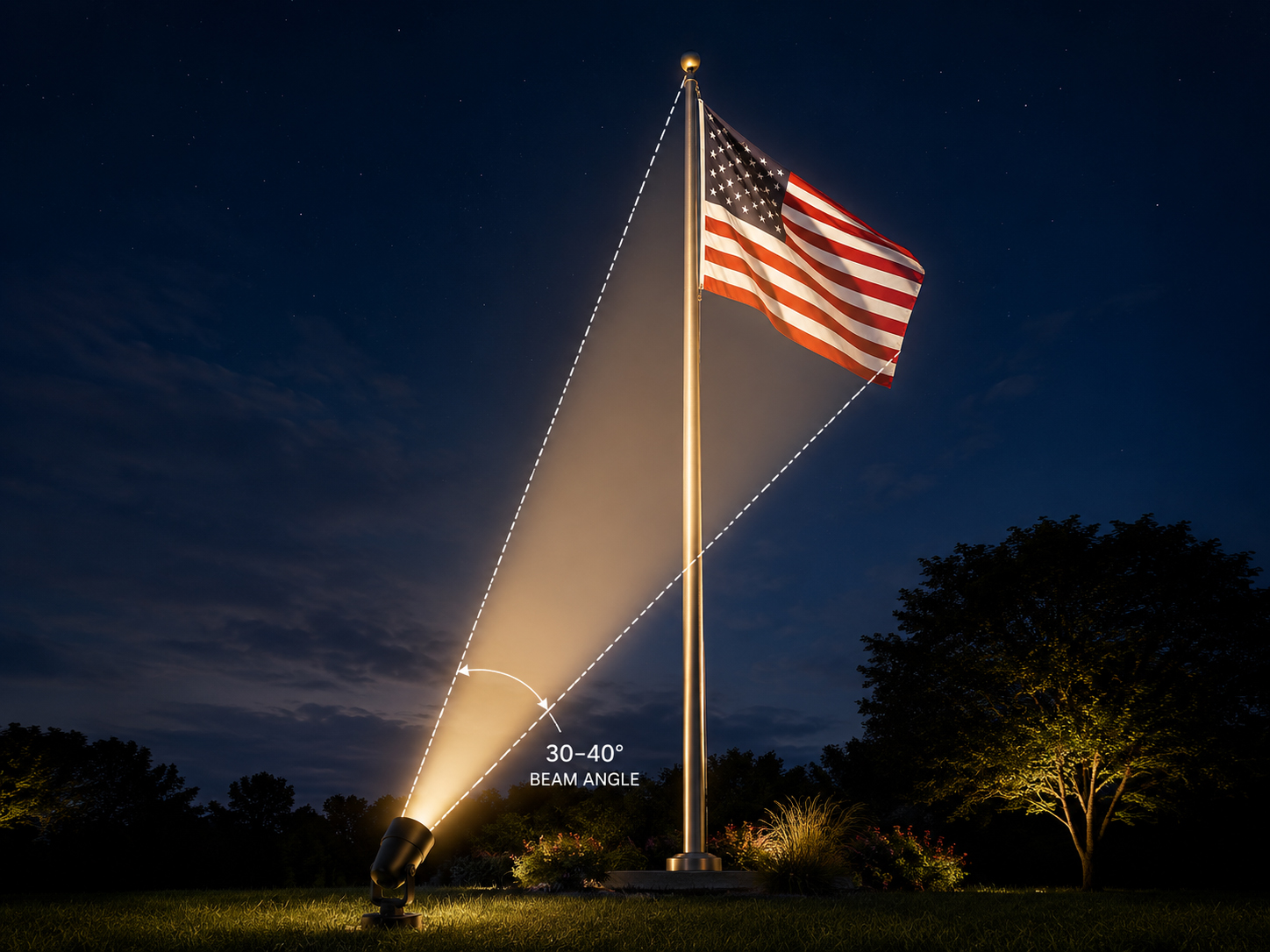
The fixture and panel should be located for sun, beam angle, pole height, and viewing direction.
Lighting does not replace basic care. A worn, torn, or tangled flag still needs attention.
Sites vary. Schools, memorials, homes, and businesses may need different lighting approaches.
Practical note: “Proper illumination” is about the flag being visible during darkness. A solar light must have enough daytime charging exposure and battery capacity to support the intended nighttime display.
The solar answer
Solar flag lighting is a practical way to support nighttime display where trenching, electrical work, or long wire runs are unattractive. The system collects sunlight during the day and uses stored energy to illuminate the flag after sunset.
A good design considers pole height, flag size, solar exposure, fixture location, beam spread, battery capacity, and how the flag is viewed from the road, walkway, entry, memorial, or building.
SolarFlag.com
If the flag remains outdoors at night, give it the visibility and dignity it deserves. Solar lighting can make that easier, cleaner, and more beautiful.