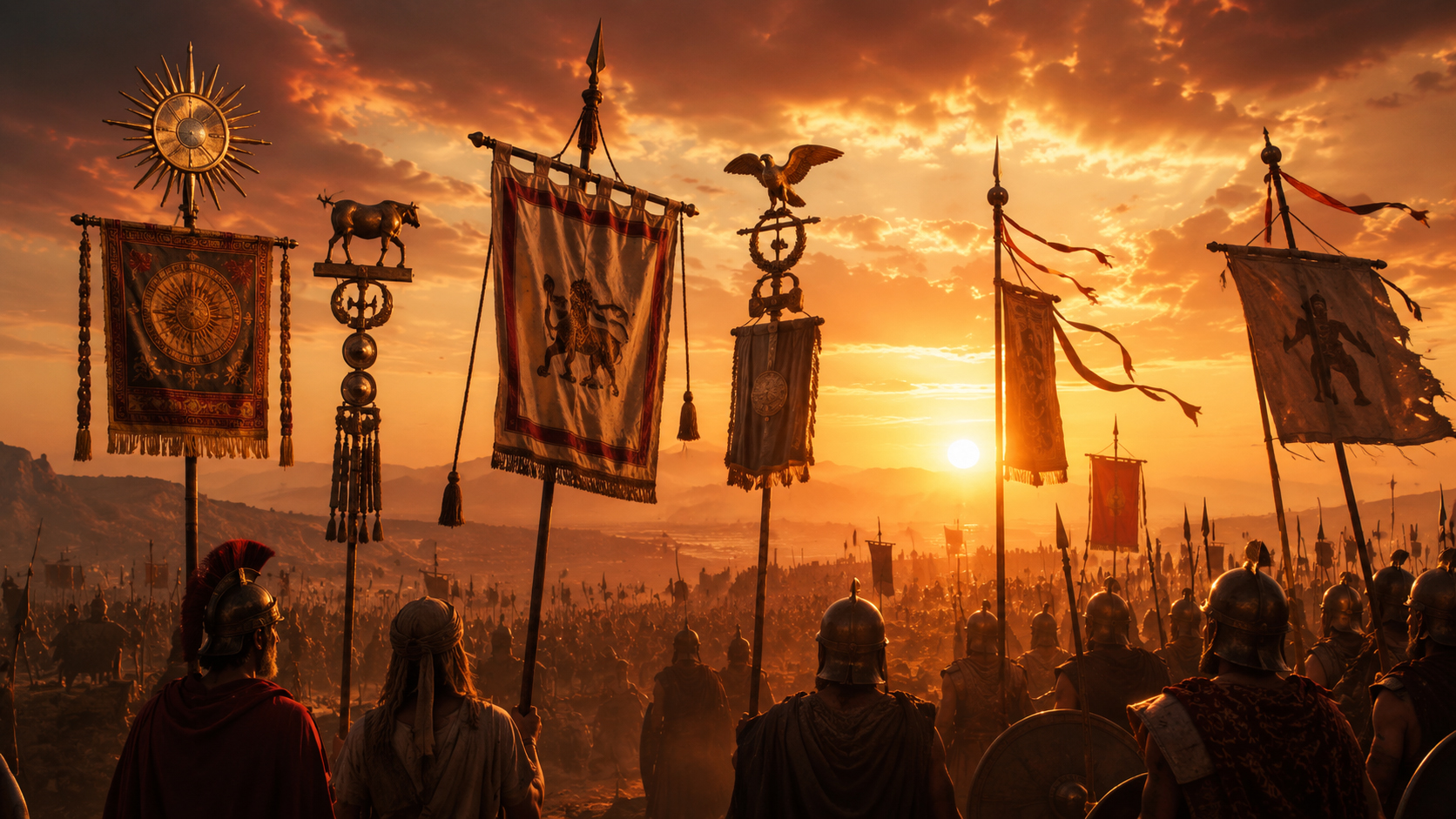

Ancient world
Standards and symbols of command
Armies, rulers, and organized groups used visible symbols to identify authority, direction, and belonging.
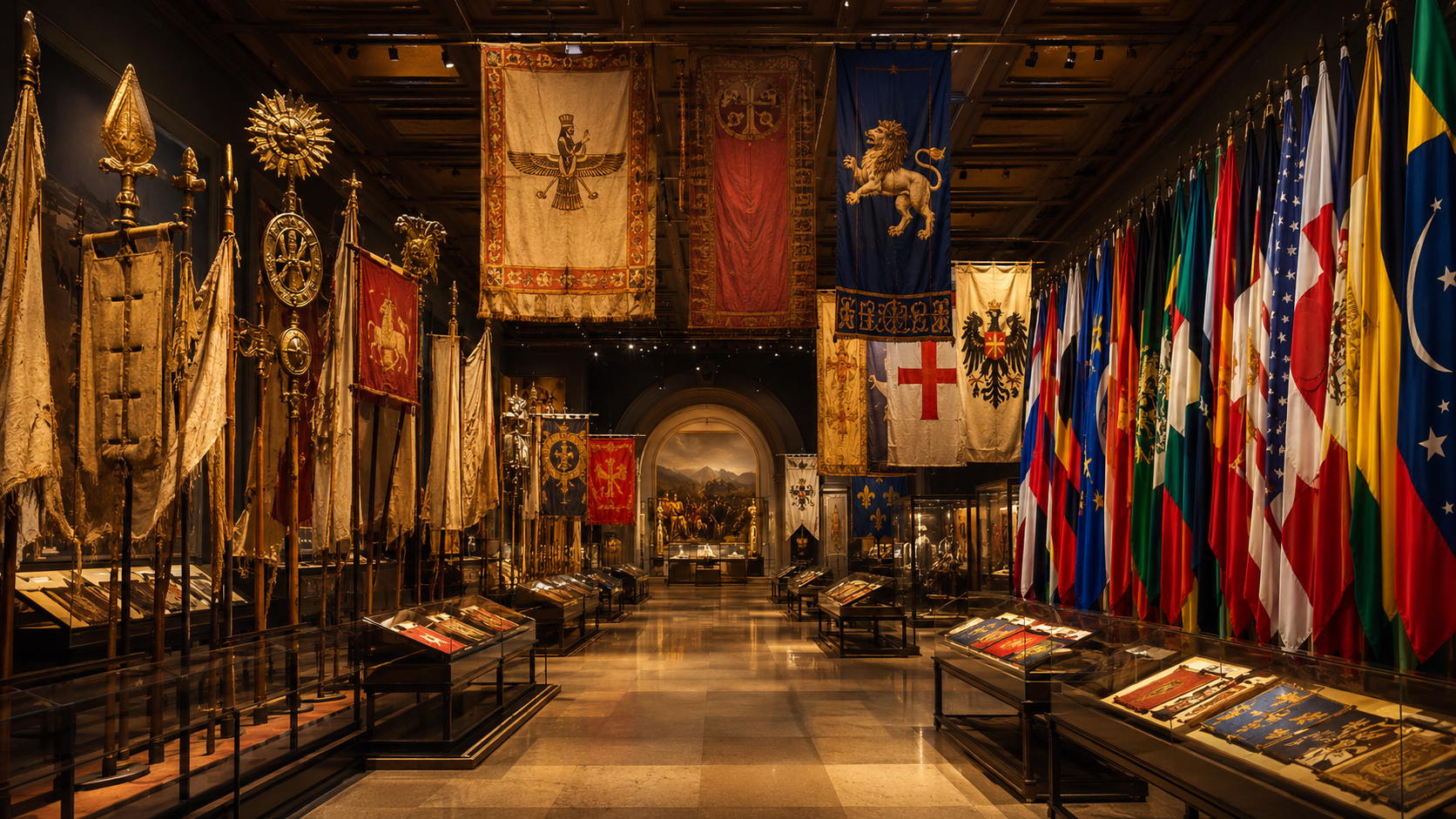
Flags are among humanity’s oldest public technologies. They marked armies, ships, rulers, cities, revolutions, warnings, ceremonies, identities, and dreams. A flag is cloth — but it can carry a whole civilization’s memory.
The old visual language
Long before electronic communication, flags worked at human distance. They could be seen from a city wall, a battlefield, a ship, a parade route, a public square, or the top of a hill.
They were practical before they were decorative. A flag told people where to gather, who commanded, what danger approached, which ship was friendly, which cause was rising, and which community was speaking.
A quick timeline
The history of flags is not one straight line. It is a long evolution from military standards and royal banners into national flags, civic flags, maritime codes, protest flags, racing flags, safety flags, and ceremonial flags.
Armies, rulers, and organized groups used visible symbols to identify authority, direction, and belonging.
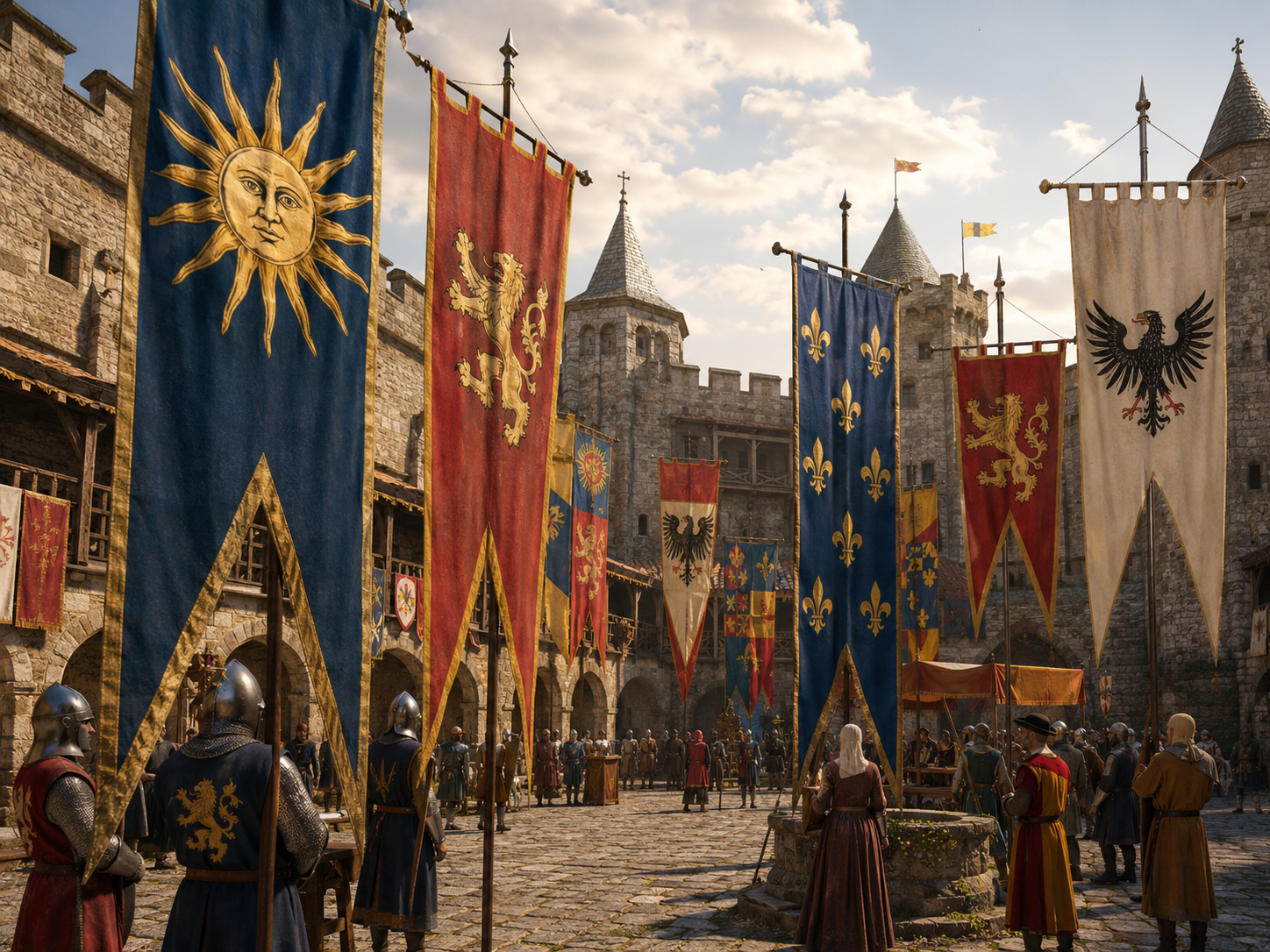
Standards and banners helped people recognize formations, leaders, territories, and organized power.
Colors, animals, crosses, patterns, and crests became compact visual identities for families, armies, and towns.
Ensigns, pennants, signal flags, and maritime codes helped ships identify themselves and communicate across water.
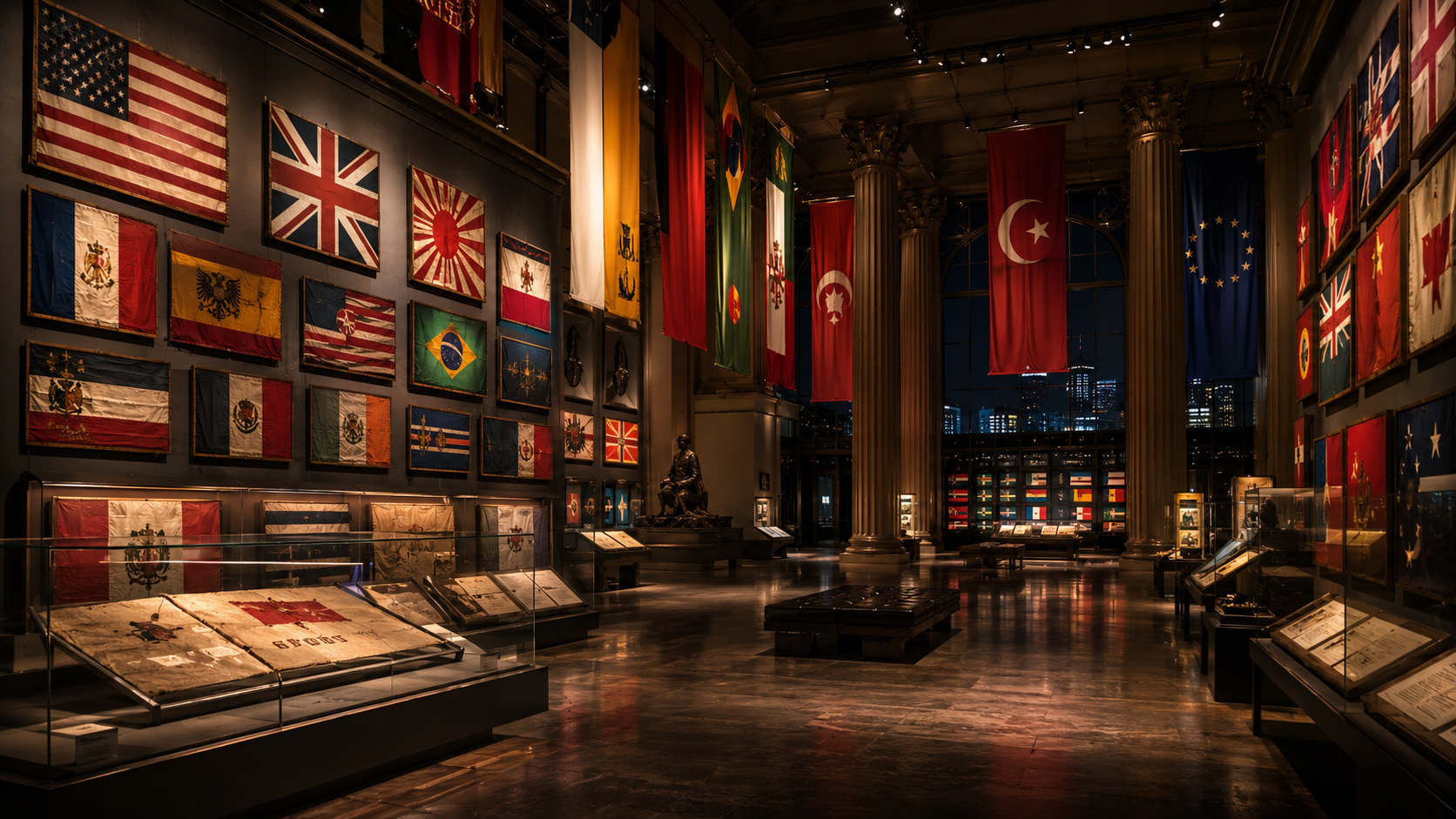
Flags became symbols of countries, constitutions, revolutions, independence, unity, memory, and ceremony.
Flags appear at schools, ships, embassies, sports events, races, beaches, memorials, protests, and homes.
The meaning of cloth
The best flags are memorable at a distance. Their shapes, colors, stars, stripes, crosses, suns, crescents, seals, animals, and patterns compress a story into a single moving image.
That is why flags are beautiful. They are simple and complicated at the same time: simple enough to fly, complicated enough to hold centuries.
SolarFlag.com
SolarFlag.com connects practical nighttime flag lighting with the deeper history of flags as symbols, signals, and public memory.