1
Union
The stars make the flag a symbol of states joined together under one national identity.
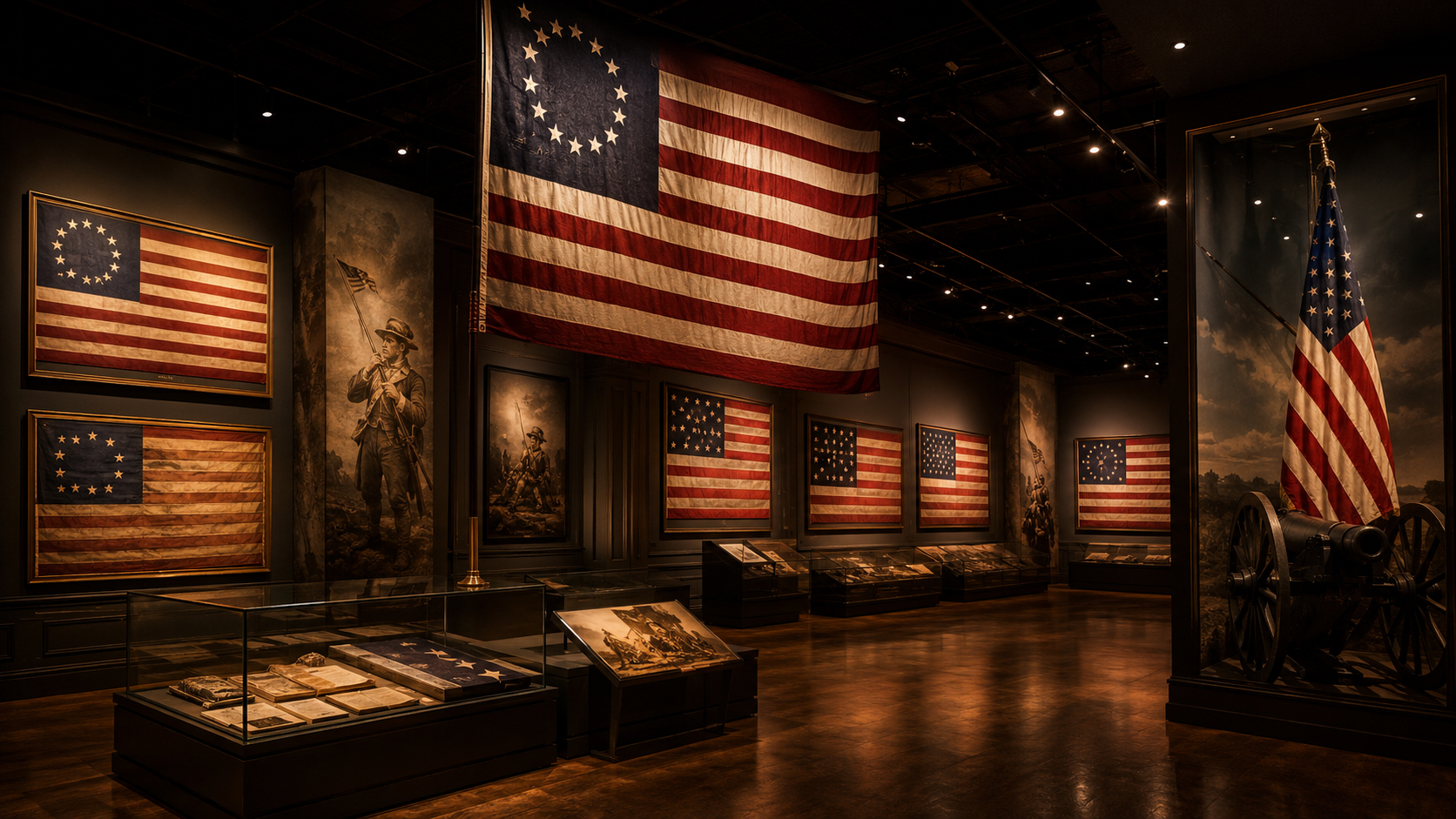
The American flag is more than a design. It is a moving record of union, independence, expansion, sacrifice, ceremony, service, mourning, pride, and the unfinished work of a republic.
The American symbol
The American flag’s design is built around a simple visual idea: stars for states, stripes for the original colonies, and a field of blue that holds the union together. As the United States grew, the star field changed with it.
That makes the flag unusual. It is not frozen as a single historical relic. It has adapted through time while holding the same central promise: many states, one union.
What the flag carries
The American flag appears in schools, homes, ships, embassies, memorials, uniforms, parades, courtrooms, city halls, fire stations, and cemeteries. Its meaning depends not only on design, but on use.
The stars make the flag a symbol of states joined together under one national identity.
The thirteen stripes remember the original colonies and the birth of the republic.
At military and civic sites, the flag carries the memory of those who served.
At half-staff, funerals, and memorials, the flag becomes a public language of grief.
At homes, schools, and businesses, the flag can signal civic pride and belonging.
The flag’s dignity depends on how it is displayed, handled, stored, retired, and lit.
Stars, stripes, and night
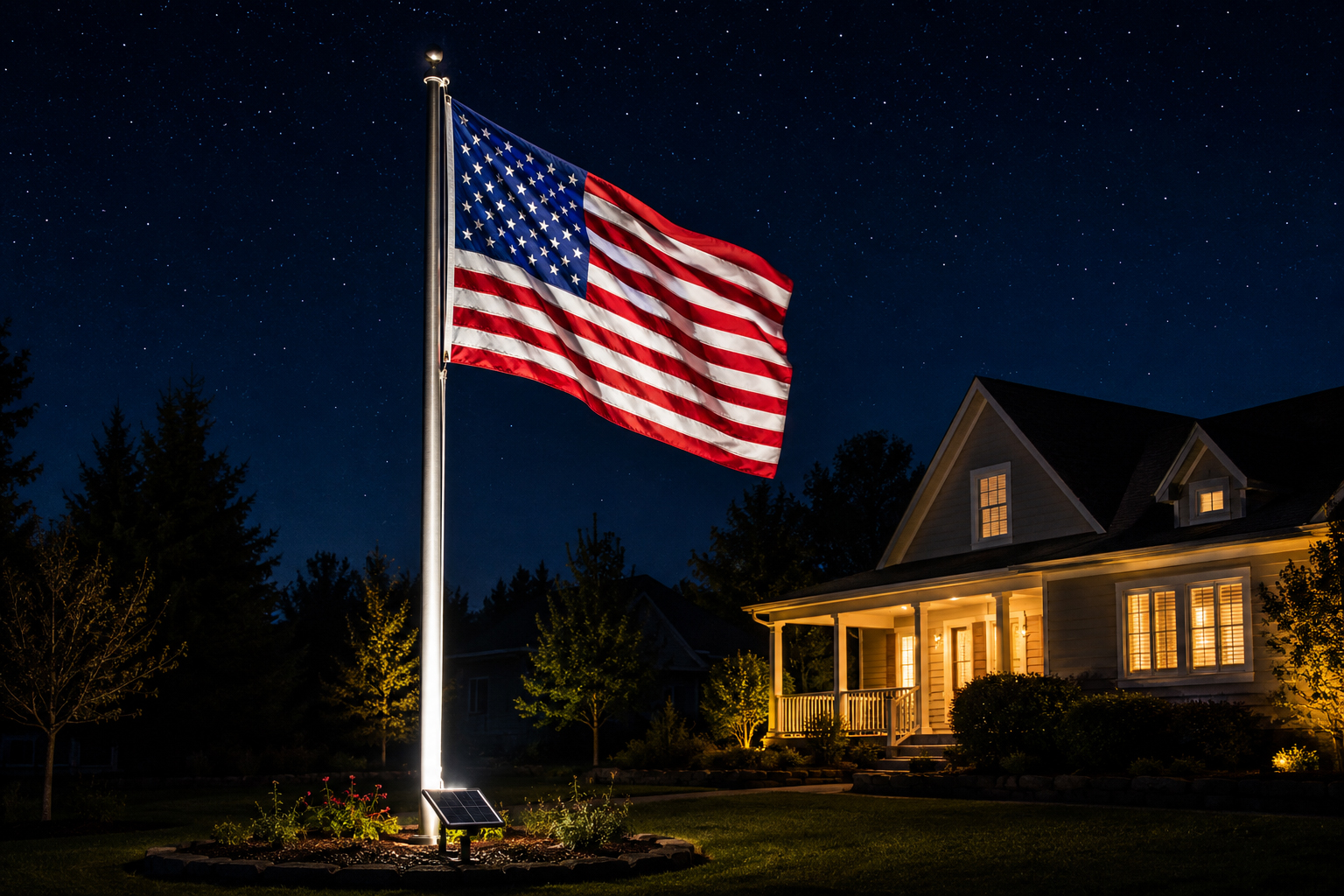
The American flag is often displayed outside homes, schools, businesses, veterans halls, city buildings, and memorial sites. When it remains flying at night, proper illumination becomes part of the display.
Solar flag lighting connects the old symbol to a practical modern solution: use the sun by day so the flag remains visible after dark.
A short timeline
The American flag has changed as states entered the union. Each new star made the flag a living chart of the country’s political growth.
The Continental Congress resolved that the flag would have thirteen stripes and thirteen stars.
The flag changed after Vermont and Kentucky joined the union.
The law returned the flag to thirteen stripes and provided for adding stars for new states.
Executive guidance helped standardize the appearance of the flag in modern form.
The 49-star flag was followed by the 50-star flag after Hawaii became a state.
The current American flag is a familiar national symbol, but its history is one of change and continuity.
SolarFlag.com
The American flag was raised to be seen. If it flies at night, lighting helps keep the symbol visible, respectful, and alive.