1
Color
Red, white, blue, green, black, yellow, and gold often carry political, historic, or cultural meaning.
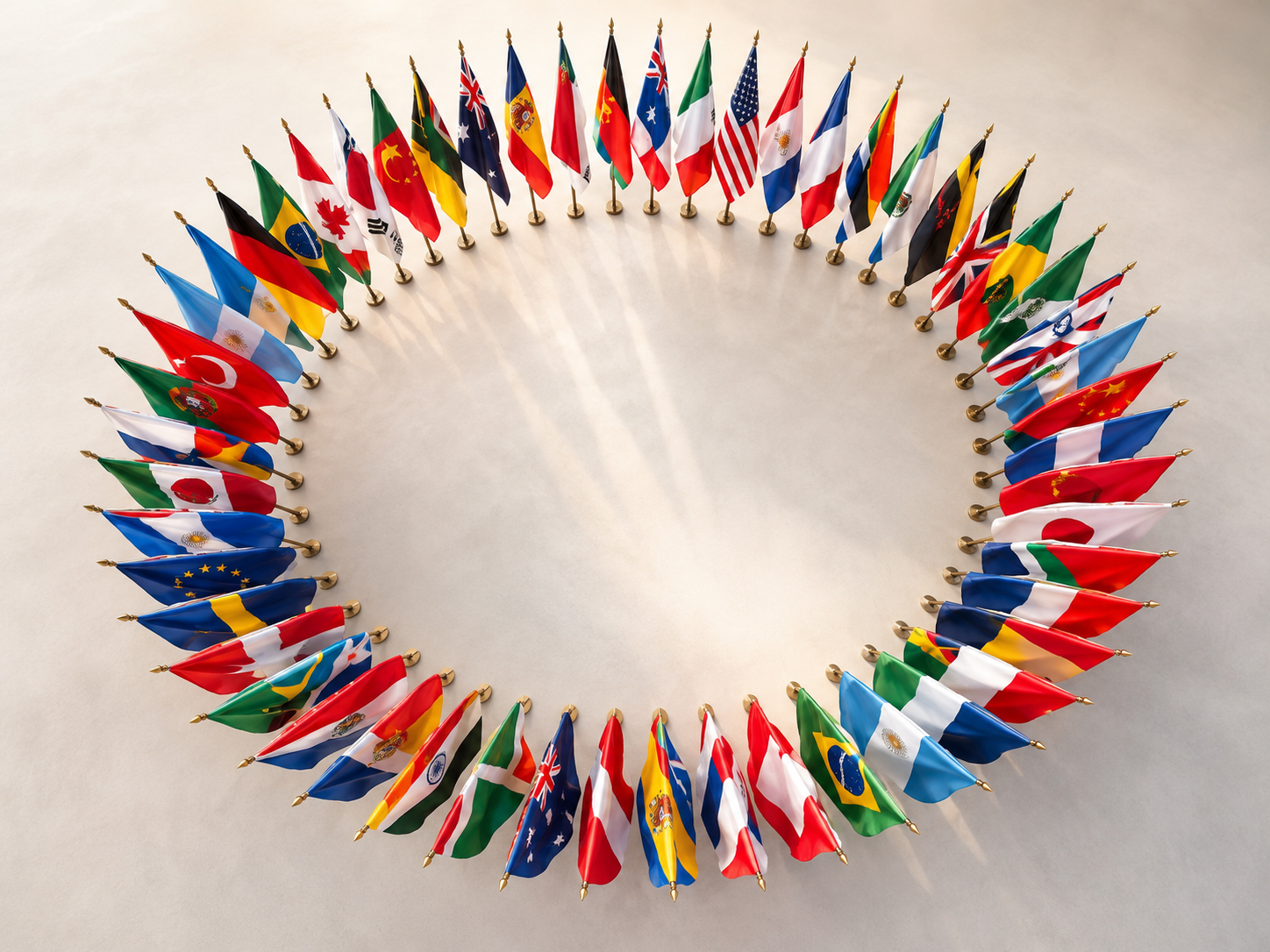
The flags of the world turn countries into images: stars, stripes, crosses, crescents, suns, eagles, shields, trees, colors, and patterns that carry memory, geography, independence, faith, monarchy, republic, and national identity.
A global language
A flag is a country reduced to a mark that can fly above an embassy, wave at the Olympics, appear on a ship, hang in a classroom, mark a border crossing, or appear beside a name at the United Nations.
The beauty of world flags is that they solve the same problem in wildly different ways. Some use three stripes. Some use stars. Some use animals, plants, weapons, maps, shields, crosses, crescents, suns, or seals. All of them are attempts to make a nation visible.
What world flags carry
World flags are not just graphics. They are compact national arguments about identity, history, geography, faith, political ideals, monarchy, revolution, federation, sacrifice, and belonging.
Red, white, blue, green, black, yellow, and gold often carry political, historic, or cultural meaning.
Stripes, crosses, diagonals, fields, canton blocks, and triangles organize the visual message.
Celestial symbols can represent states, ideals, geography, light, direction, and destiny.
Religious and cultural symbols can connect a flag to faith, history, and civilization.
Eagles, lions, dragons, bears, trees, leaves, and flowers can turn nature into identity.
Some flags use detailed state emblems, shields, or seals to carry formal authority.
The beauty of difference
The flags of the world are a global gallery of identity. Some are minimal and unforgettable. Others are elaborate and historical. Some feel ancient. Some feel revolutionary. Some feel ceremonial. Some feel like maps, shields, prayers, or songs.
Together, they prove that flags are one of humanity’s most durable forms of public design: simple enough to fly, powerful enough to carry a nation.
SolarFlag.com
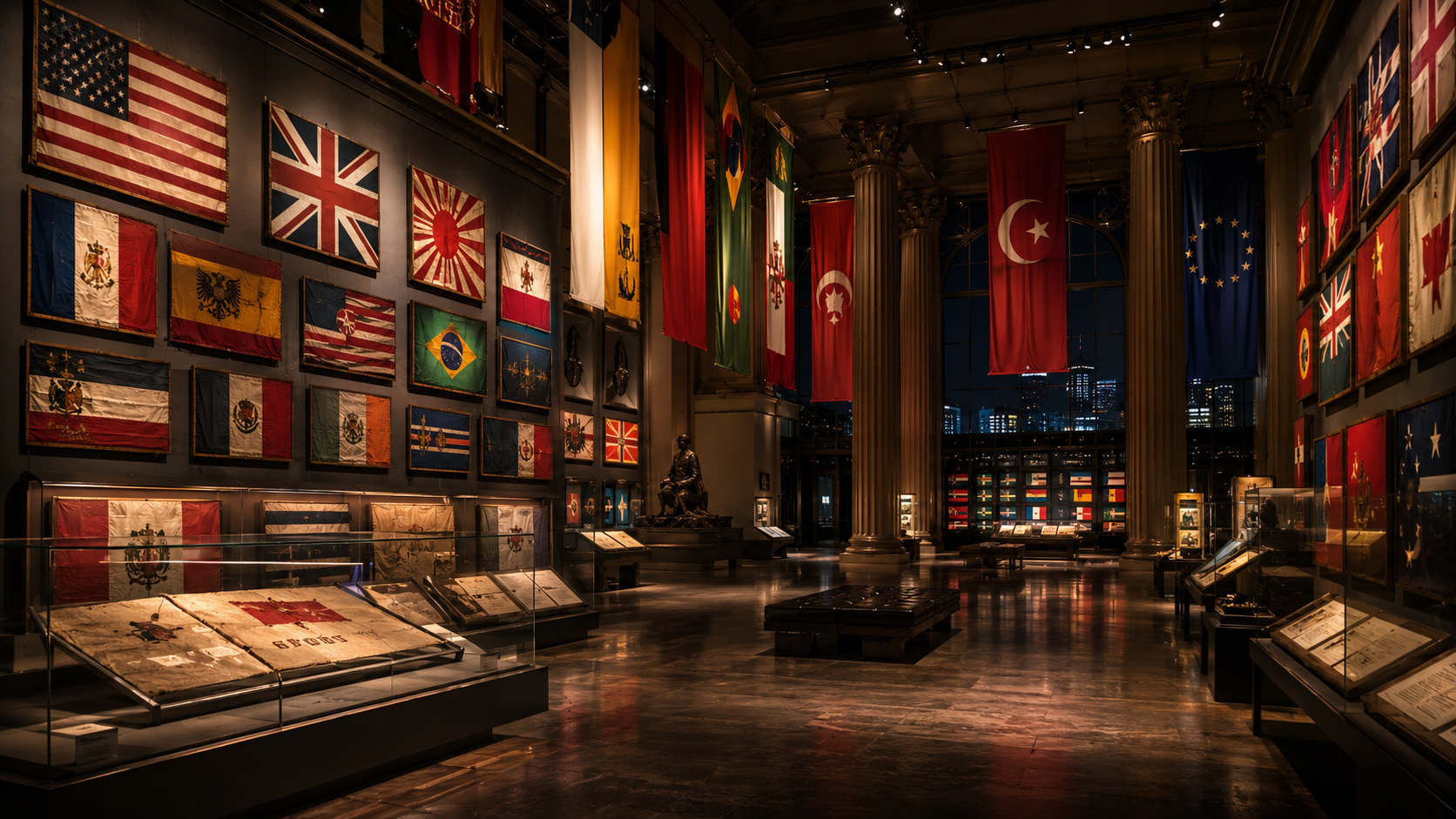
Whether flying over a home, school, embassy, ship, memorial, or civic space, a flag is raised to be seen. At night, light keeps that meaning present.