A
Positions
Different arm angles represent different letters, numbers, or control signals.
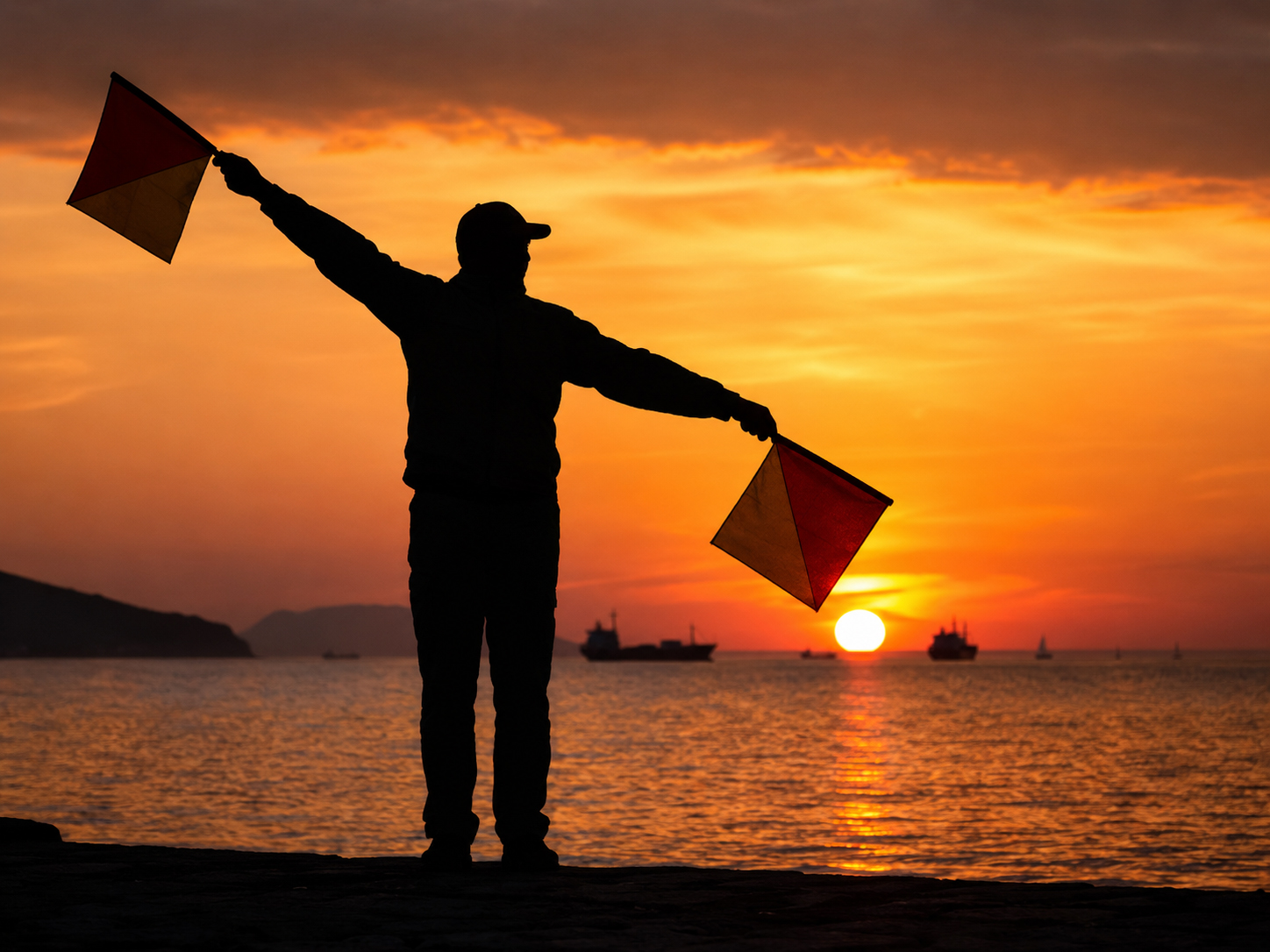
Semaphore flag signaling uses two handheld flags and a system of arm positions to send letters across distance. It is part dance, part code, part discipline — and one of the most human forms of flag communication.
Body as signal mast
In semaphore, the flags make the body readable. Each arm position represents a letter or control signal. The person becomes a living signal tower, visible across a field, deck, beach, station, or training ground.
Semaphore is direct, disciplined, and beautiful because it relies on the same things that make flags work: contrast, distance, visibility, repetition, and shared meaning.
Different arm angles represent different letters, numbers, or control signals.
Bright flags make the signaler’s arm positions easier to read at distance.
Good signaling depends on clear timing, controlled movement, and readable pauses.
Semaphore requires practice so the signal is clean, consistent, and understood.
Where semaphore fits
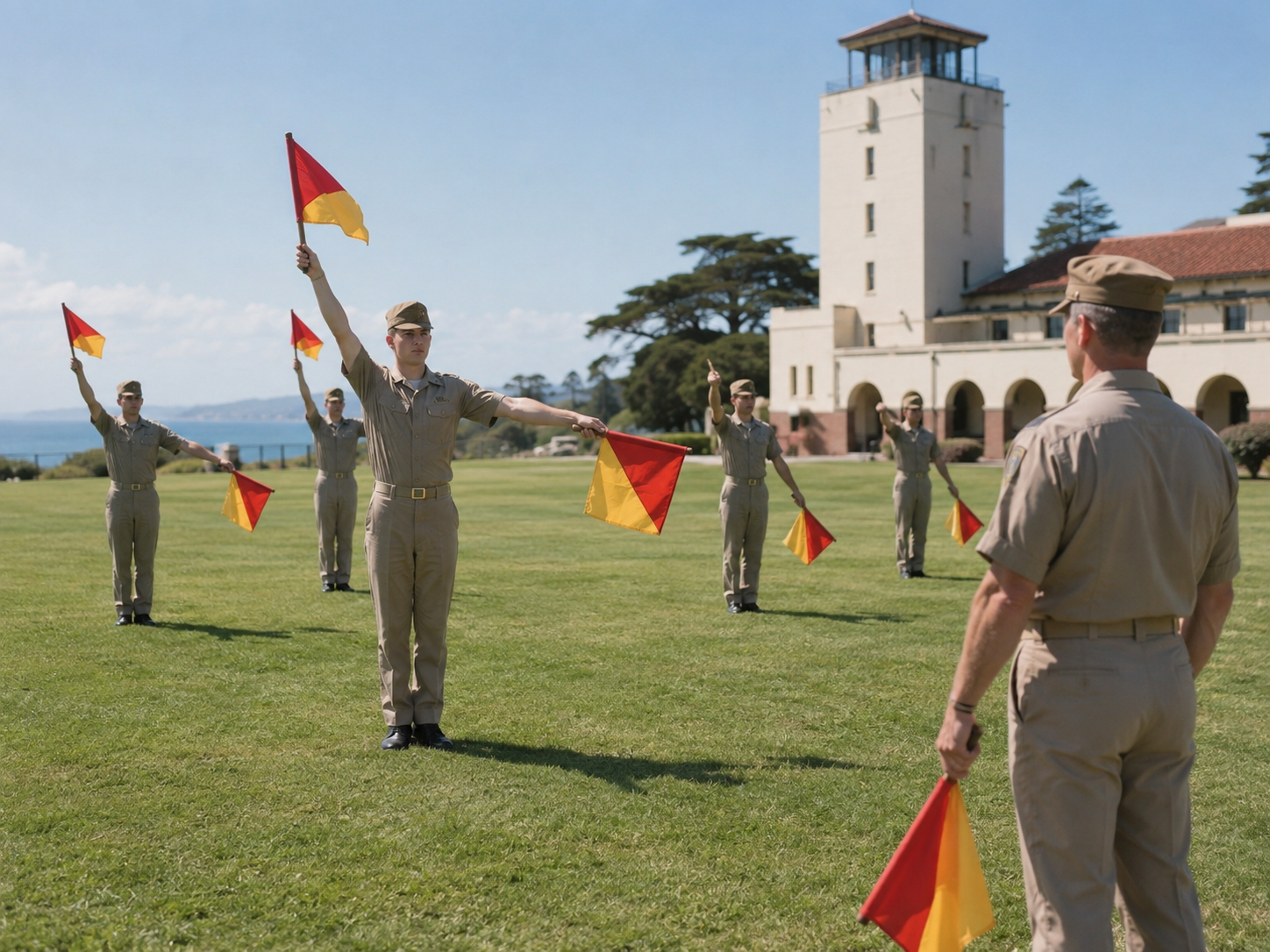
Semaphore has been used in maritime, military, railway, scouting, and educational contexts. Even when replaced by radio and electronic systems, it remains a powerful demonstration of how flags can become structured language.
Semaphore belongs to the broader world of nautical signaling and visual seamanship.
Handheld visual signals helped communicate when sound, radio, or wiring were unavailable.
Semaphore became a classic educational exercise in discipline, code, and teamwork.
Visual arm and flag signaling connects to broader traditions of transportation signals.
Simple visual codes remain valuable when devices fail or distance prevents speech.
Semaphore is vivid, teachable, and memorable because people can see the language happen.
The beauty of the signaler
Maritime signal flags hang from lines. National flags fly from poles. Semaphore flags move with a person. That makes the signal physical, rhythmic, and alive.
It reminds us that flags are not passive. They are tools for communication, ceremony, warning, identity, and memory — lifted into view by people.
SolarFlag.com
Two flags, two arms, and a shared code can turn distance into language. That is the enduring genius of flag signaling.