★
Stars
States, unity, ideals, guidance, revolution, federation, heaven, or national destiny.
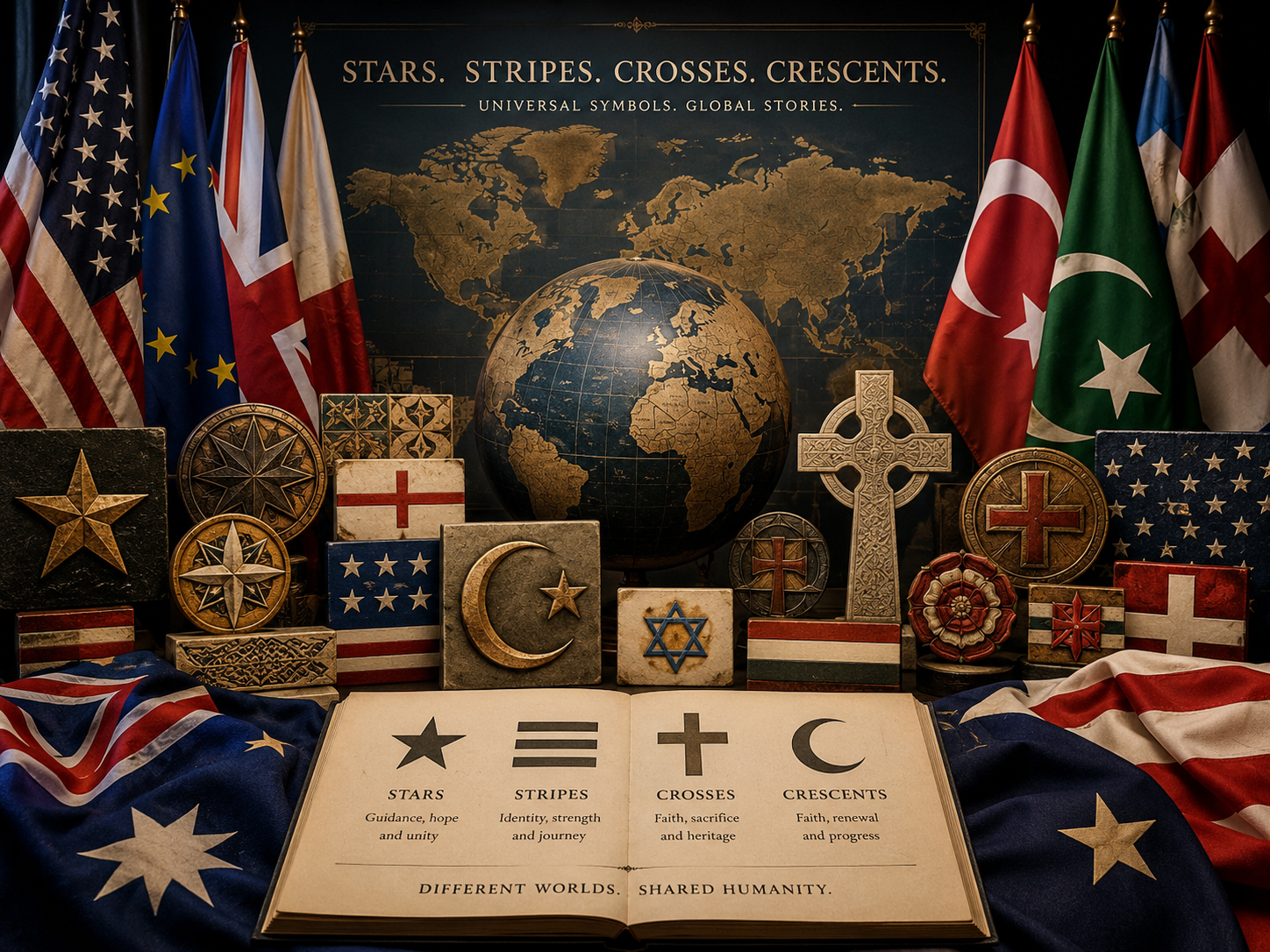
Flags use simple symbols to carry enormous meaning. A star can become unity. A stripe can become revolution. A cross can become faith and history. A crescent can become civilization, identity, and memory.
Visual shorthand
Flag symbols are powerful because they are fast. From a distance, the eye catches the star, stripe, cross, crescent, sun, eagle, shield, tree, or dragon before the mind reads history.
The meaning is never universal. A star can mean a state, a people, a guiding ideal, a revolution, a religion, or a federation. The symbol must be read through the flag’s country, era, and story.
Major symbols
These recurring symbols help flags become readable. They give a nation or movement a visual anchor that people can recognize, remember, and rally around.
States, unity, ideals, guidance, revolution, federation, heaven, or national destiny.
Colonies, regions, equality, revolution, political ideals, or simple visual rhythm.
Christian heritage, historic kingdoms, Nordic identity, crusading memory, or national tradition.
Faith, civilization, lunar symbolism, Ottoman inheritance, cultural identity, or continuity.
Light, dawn, geography, power, renewal, life, direction, or national mythology.
Authority, courage, empire, sovereignty, vision, protection, or state power.
Heraldry, defense, official authority, dynastic memory, or formal state identity.
Land, nature, agriculture, endurance, sacred geography, fertility, or local identity.
How symbols earn meaning
The graphic mark is only the beginning. Meaning comes from ceremony, repetition, struggle, schoolrooms, memorials, victories, defeats, public buildings, ships, uniforms, and ordinary people recognizing the same sign over time.
A strong symbol lets a flag be recognized instantly, even when moving or seen from far away.
Symbols collect historical meaning through revolutions, wars, unions, ceremonies, and public use.
People begin to see themselves in the symbol because it appears at important moments.
Flags are distance technology. The symbol must work before fine detail disappears.
A flag is rarely still, so the symbol must survive wind, folds, shadow, and light.
Without light, the symbol disappears. Night display depends on keeping the design visible.
Symbols after sunset
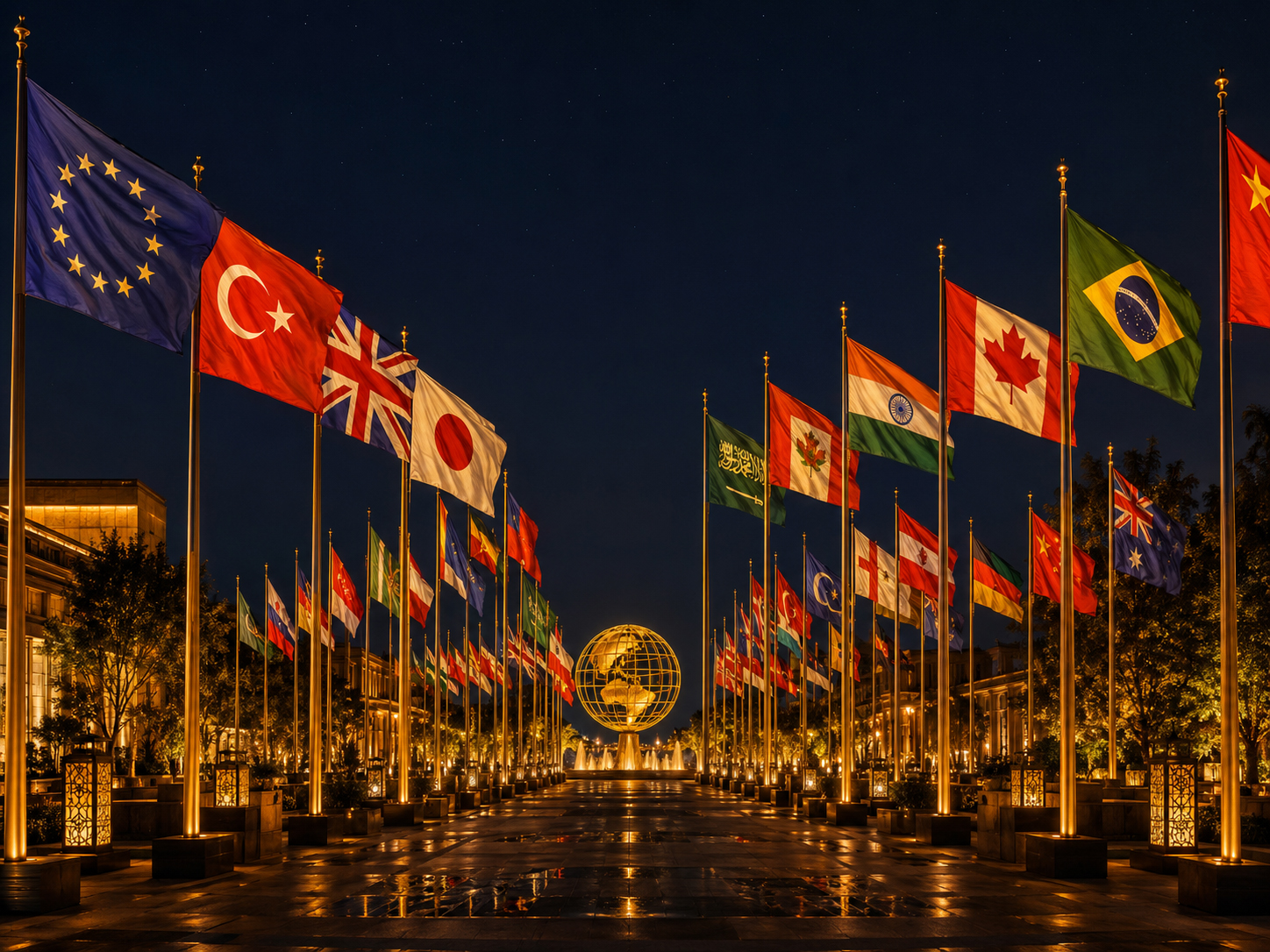
Stars, stripes, crosses, crescents, suns, and shields only carry meaning when they can be seen. At night, proper illumination keeps the flag readable and dignified.
Solar flag lighting uses the day’s sunlight to preserve the flag’s symbols after dark. The goal is not to turn the flag into a billboard. The goal is respectful visibility.
SolarFlag.com
A flag’s shapes carry the story. If the flag flies at night, light keeps that story visible.