CRAFT
Small craft
Marine warning systems may use flags or pennants to warn smaller vessels of hazardous conditions.
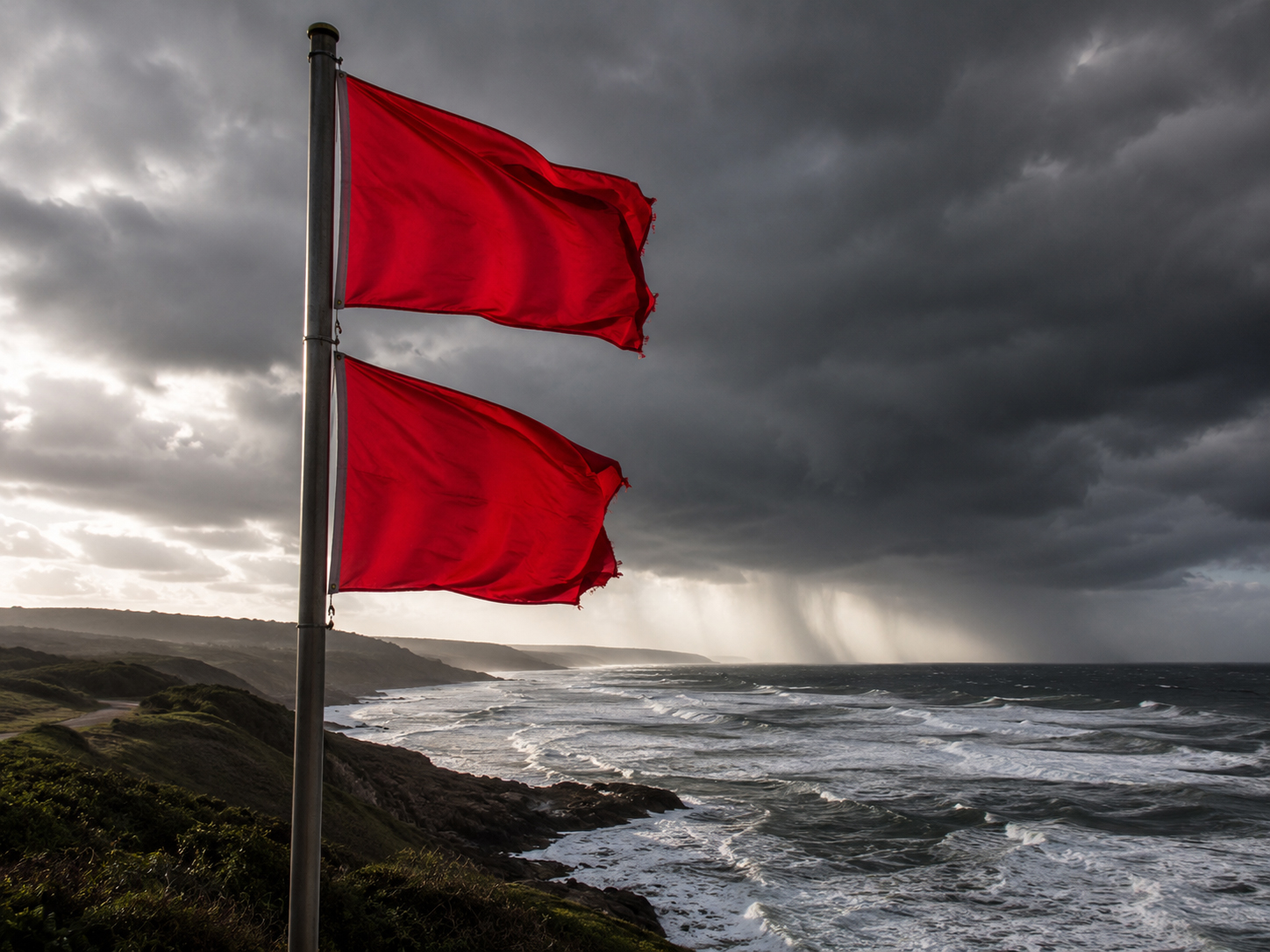
Weather flags turn wind, storm, surf, fog, fire danger, and marine conditions into visible public warnings. They belong to an old and practical idea: when conditions change, raise a signal everyone can see.
Public weather warning
Weather is local, fast, and sometimes dangerous. Long before people carried phones, weather flags warned harbors, beaches, farms, railroads, towns, and ships that conditions were changing.
The exact meanings depend on the issuing authority and local system. The design purpose is constant: make caution visible at distance, in public, without needing electricity, sound, or a screen.
Marine warning systems may use flags or pennants to warn smaller vessels of hazardous conditions.
Strong wind warnings need clear public visibility where marine and coastal users gather.
Storm flags communicate dangerous weather risk before conditions become obvious to everyone.
Coastal communities have long used high-visibility signals for severe tropical weather warnings.
Wind direction and strength can be communicated visually through flags, pennants, and windsocks.
Beach systems often connect weather, surf, rip current, and water safety warnings.
Dry wind, heat, and low humidity can make flag-style public warnings especially important.
Fog and visibility conditions affect harbors, roads, airports, beaches, and public safety.
Safety note: this page is educational only. Weather flag meanings vary by agency and location. Always follow official forecasts, local emergency instructions, posted signage, and marine or beach authority warnings.
Why weather flags still matter
Weather flags remain useful because public warnings must work outdoors. A flag can communicate to people without phones, apps, subscriptions, language fluency, or a working power grid.
A weather flag can be seen from a road, harbor, pier, beach, schoolyard, or public square.
Everyone sees the same condition warning at the same time, reducing confusion.
Flags continue working when electricity, phones, speakers, or digital signs are unavailable.
Harbors and coasts have long needed visible weather signals for boats and shore users.
Weather, surf, wind, and water hazards can be summarized through beach warning flag systems.
Visible warnings teach communities to look up, pay attention, and respect changing conditions.
The public sky
A weather flag connects the sign to the condition. Wind moves it. Clouds frame it. Rain darkens it. Sun catches it. The warning is not abstract — it is happening in the same open air.
That is why weather flags remain beautiful and serious. They are public safety, weather literacy, and civic design on a pole.
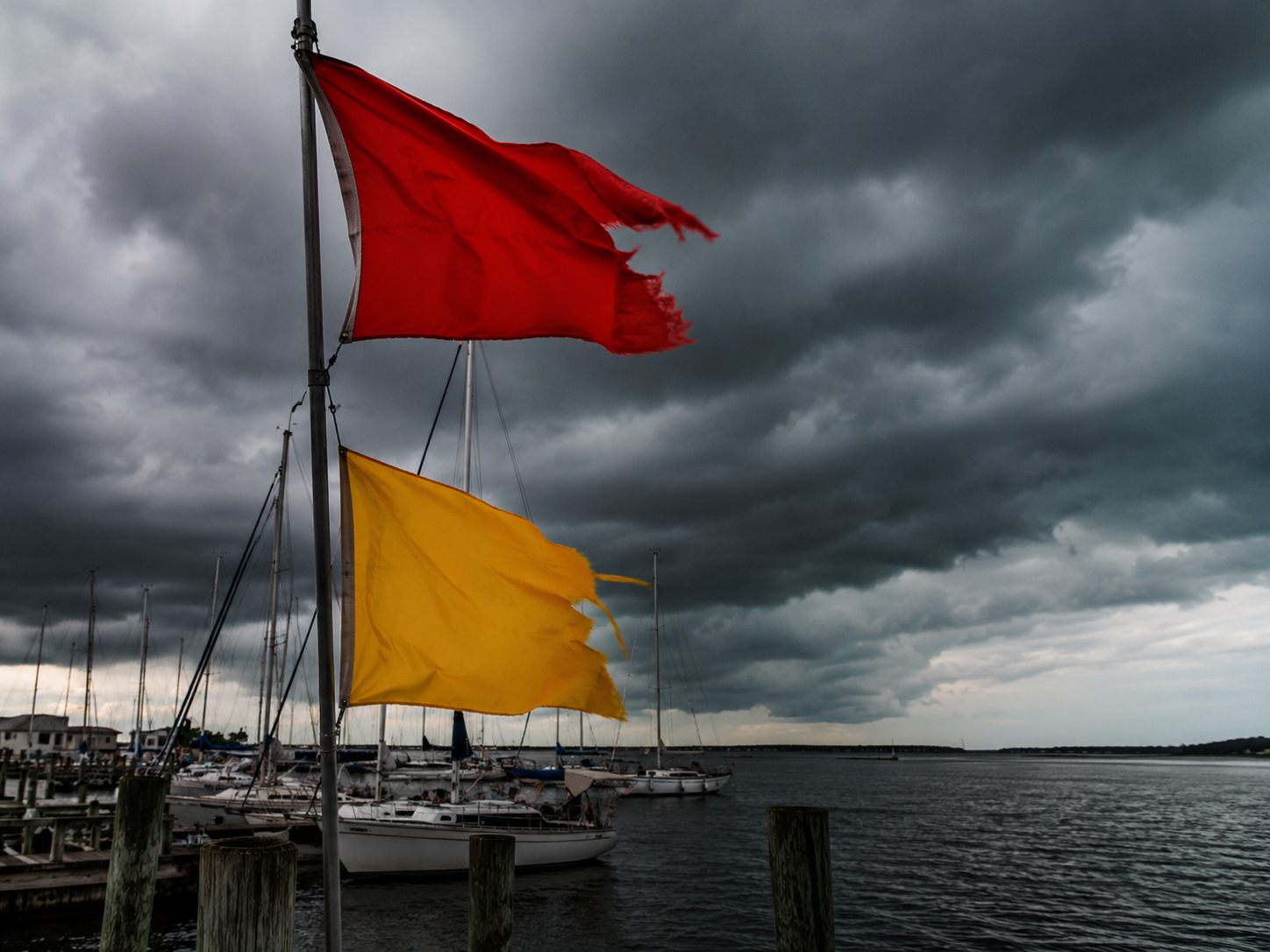
SolarFlag.com
Storms, wind, surf, fire danger, and marine conditions deserve clear public signals. A flag is still one of the simplest ways to say: pay attention now.