1
Place
Rivers, harbors, hills, bridges, roads, skylines, neighborhoods, and landmarks can become symbols.
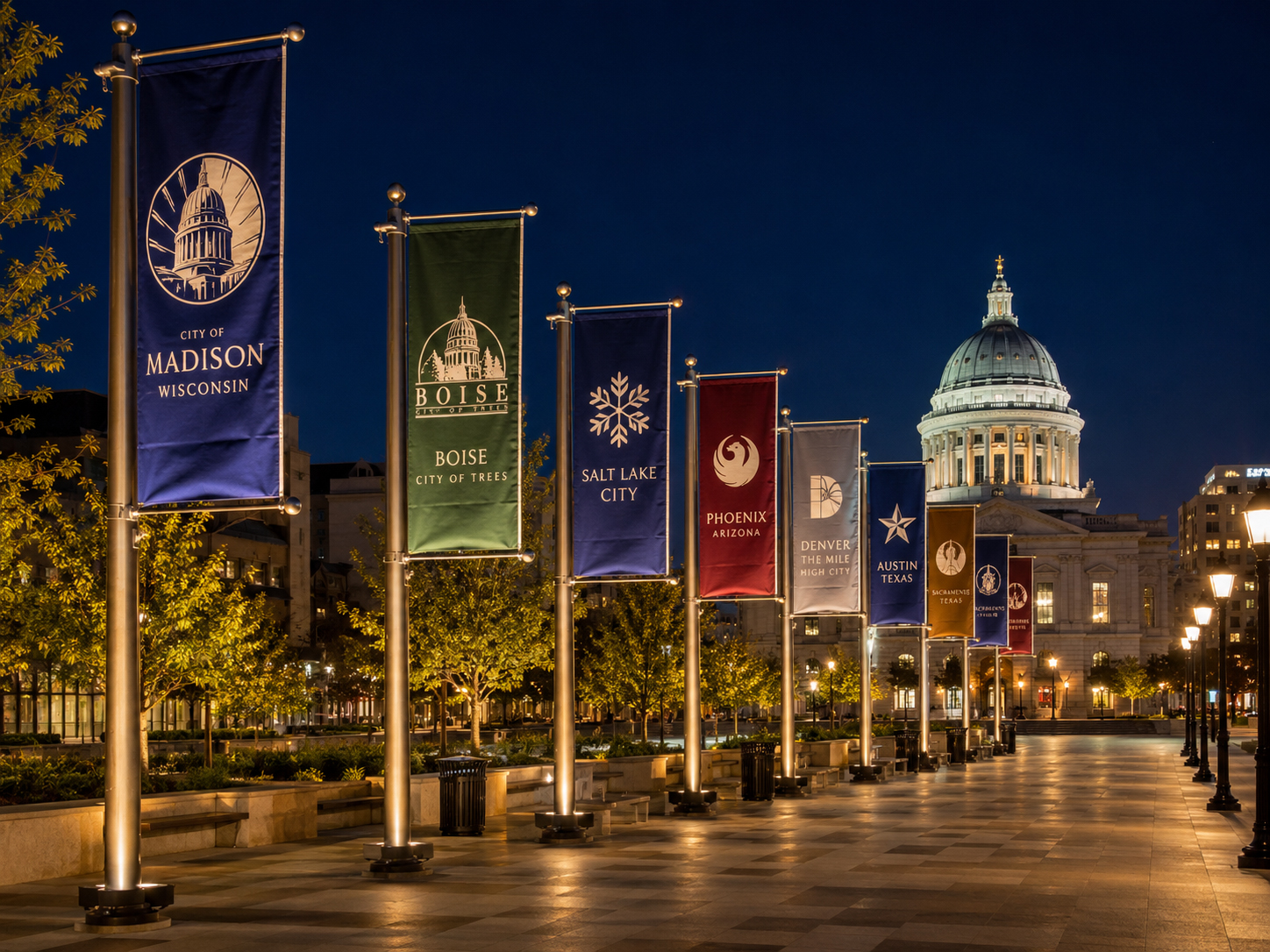
City flags are civic identity in motion. At their best, they capture skyline, river, harbor, neighborhood, history, industry, pride, and local character in a design simple enough to fly and strong enough to remember.
Civic identity
A city flag has a different job than a national flag. It must represent a place people know intimately: the streets, schools, harbor, skyline, parks, neighborhoods, sports, weather, food, history, and ordinary pride of daily life.
The best city flags become loved. They appear on hats, storefronts, murals, patches, bicycles, city halls, festivals, and homes. The worst city flags are forgotten because they look like paperwork printed on cloth.
What city flags need
A city flag has to work on a flagpole, on a street banner, on a pin, on a civic sign, and in a crowd. That requires clarity. A seal, tiny text, and too much detail often fail when the flag starts moving.
Rivers, harbors, hills, bridges, roads, skylines, neighborhoods, and landmarks can become symbols.
A good city flag should feel like it belongs to residents, not only to city hall.
Founding stories, industry, migration, disasters, victories, and civic struggles can shape meaning.
The design should be easy to recognize from a distance and easy to reproduce.
A strong civic palette can make the flag feel instantly local and memorable.
The test is whether residents want to fly it, wear it, print it, and claim it.
The civic flag test
The magic city flag is not just legally adopted. It is emotionally adopted. Residents use it because it feels like theirs.
That is why city flags matter. They turn a local place into a public symbol that can fly at city hall, in a schoolyard, on a storefront, or in a front yard after sunset.
SolarFlag.com
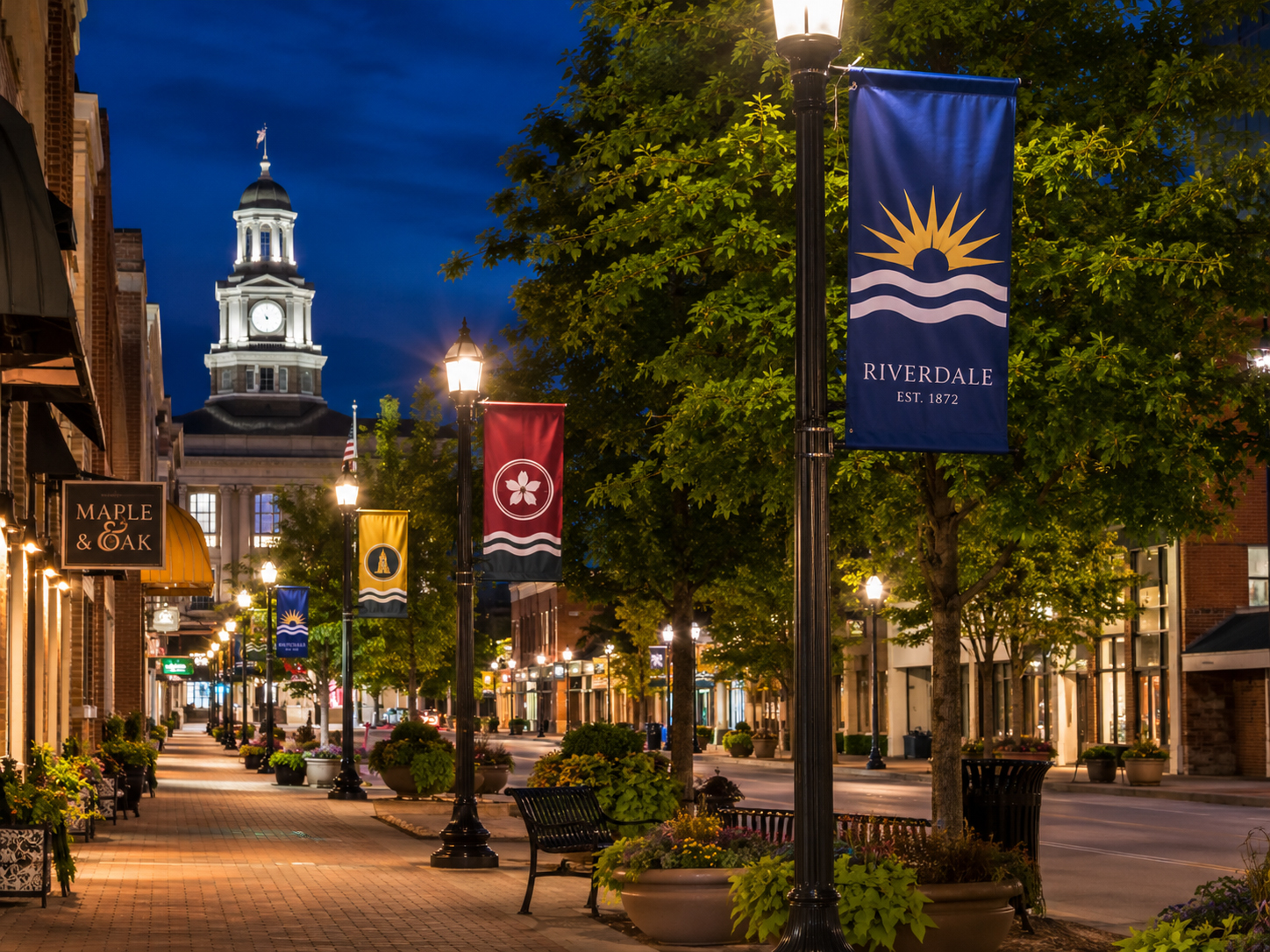
A city flag carries local identity. If it flies after sunset, solar lighting can keep that civic symbol visible, dignified, and alive.