1
Place
Mountains, oceans, plains, deserts, rivers, forests, and skies can define a flag’s visual identity.
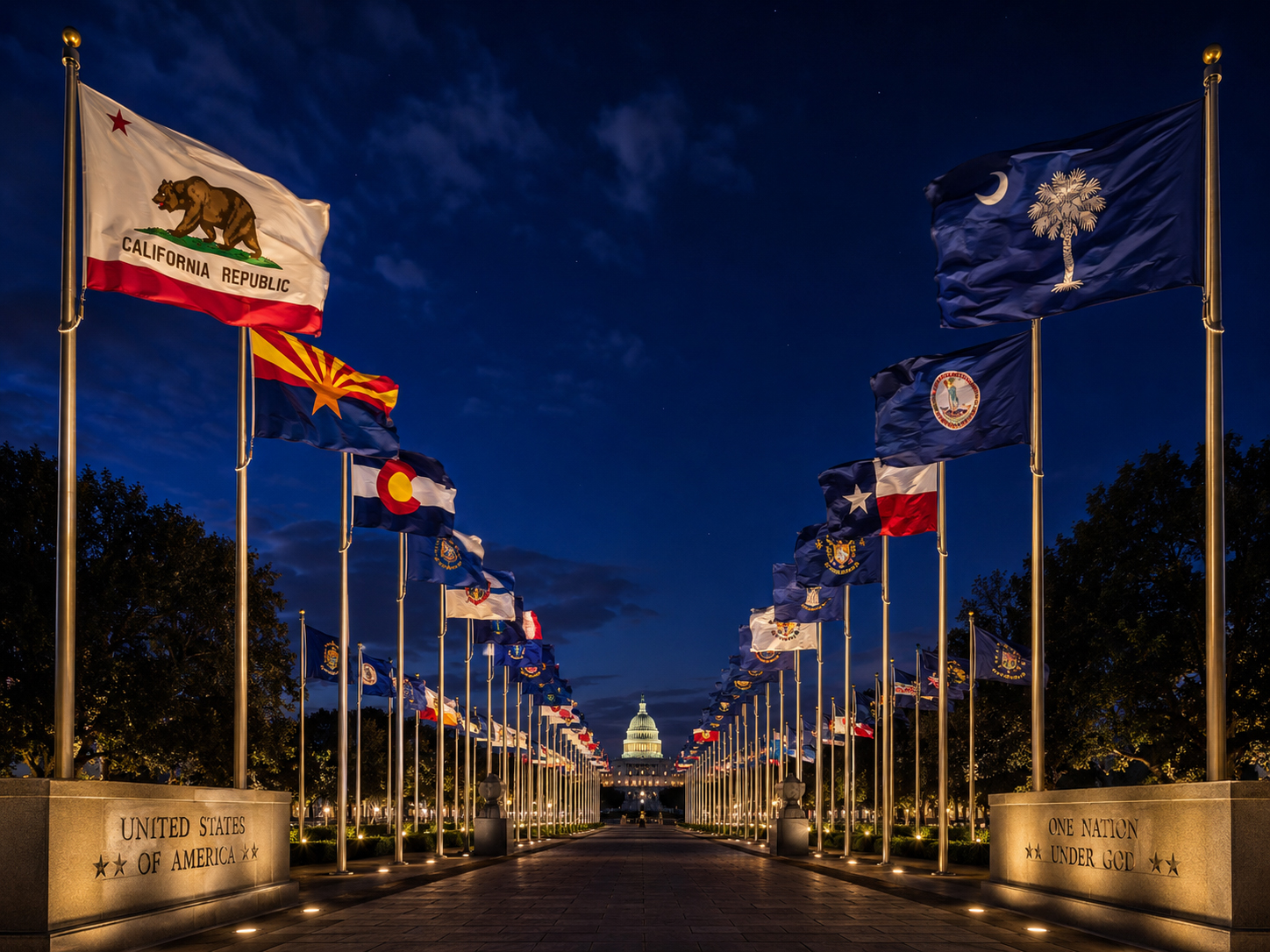
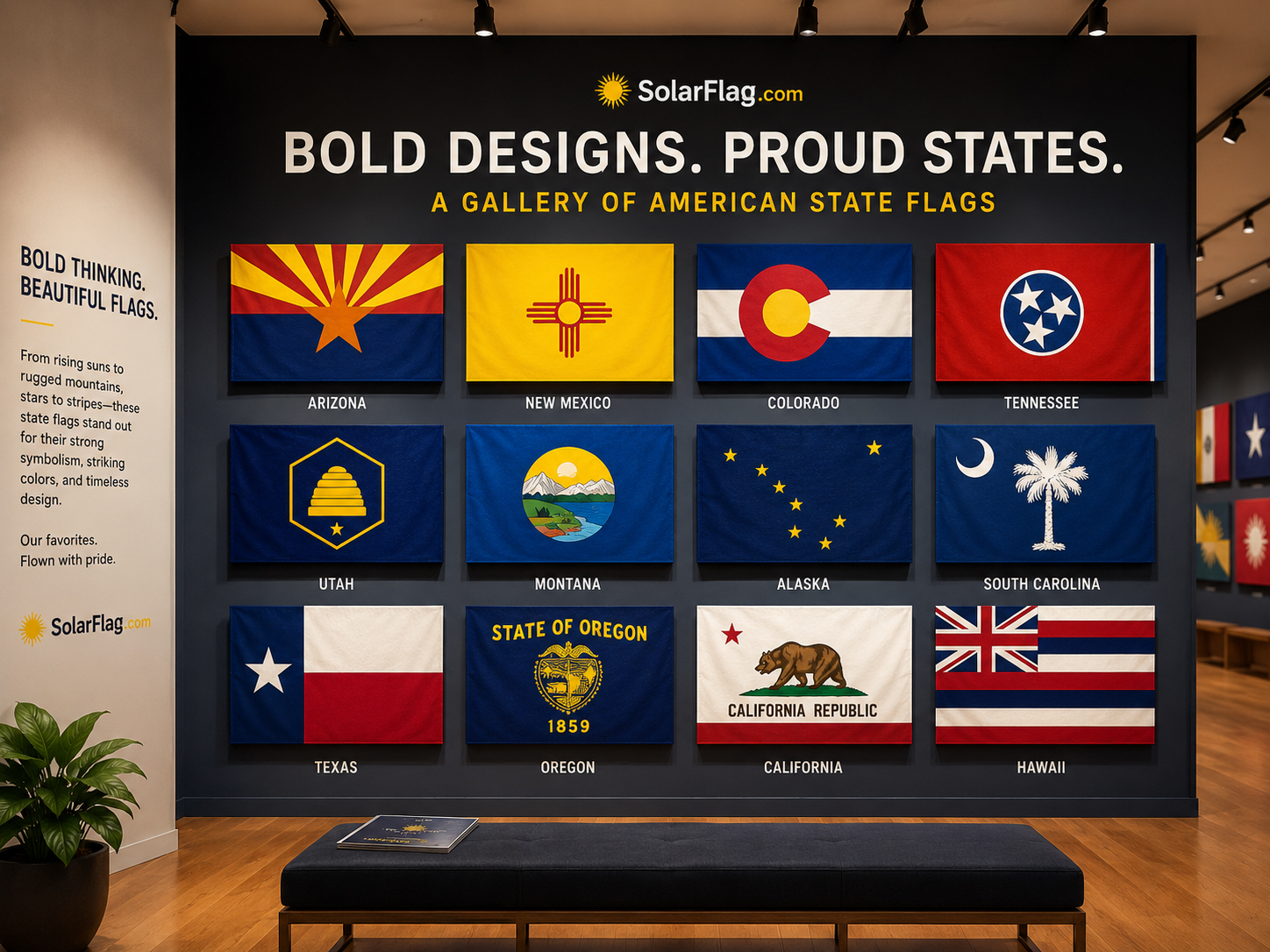
State flags carry local memory: mountains, rivers, bears, stars, seals, suns, farms, ships, battles, republics, forests, deserts, and state pride. Some are beautiful. Some are complicated. All of them try to make a place visible.
Regional identity
National flags speak for countries. State flags speak for the places inside those countries: local history, climate, landscape, settlement, industry, pride, and political memory.
The best state flags are instantly recognizable. The weakest ones often rely on detailed seals, tiny lettering, and complicated imagery that disappears in the wind or at a distance.
What state flags carry
State flags often struggle between official detail and public memorability. A flag must work on a pole, in motion, from the street, in a classroom, on a patch, or beside a state building. Design clarity matters.
Mountains, oceans, plains, deserts, rivers, forests, and skies can define a flag’s visual identity.
State flags may carry republics, battles, settlement stories, industries, and political origins.
Stars, bears, trees, suns, ships, eagles, and shields can quickly tell a local story.
State seals add official authority, but they can become hard to read from a distance.
Regional palettes can suggest desert, coast, snow, forest, agriculture, or civic tradition.
A strong state flag gives residents something visual to rally around and display with confidence.
The great state flag test
A good state flag should be simple enough to remember and strong enough to fly. It should not depend on tiny details that vanish the moment the wind catches the fabric.
The best state flags feel like place: bold, memorable, regional, and alive. The worst feel like a bureaucratic document printed on cloth.
SolarFlag.com
A state flag carries local identity. If it flies after sunset, solar lighting helps keep that identity visible, dignified, and alive.