1
Simple enough to draw
A memorable flag can be sketched from memory by a child or recognized at a glance.
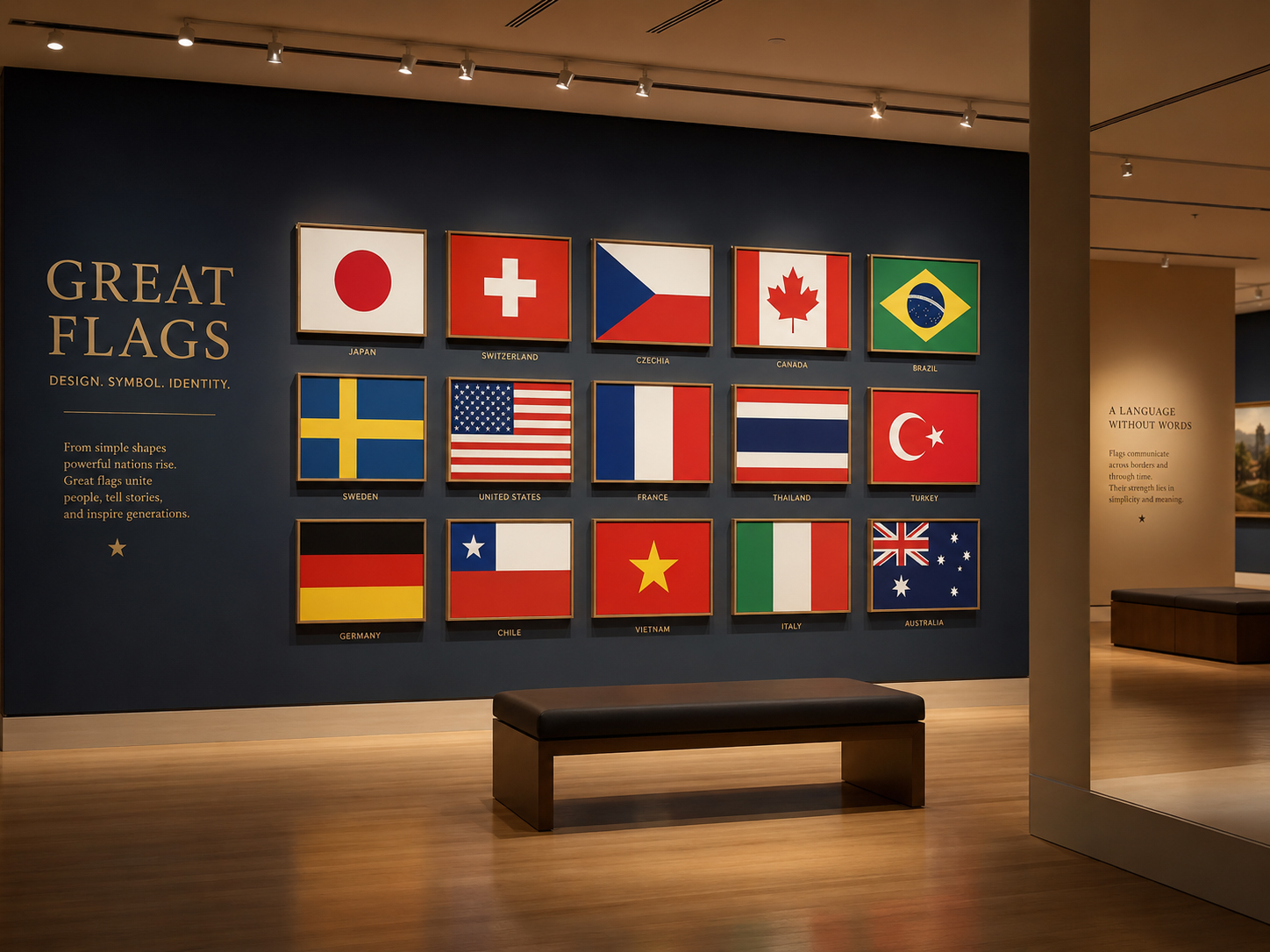
Great flag design is not decoration. It is public memory, distance readability, bold symbolism, color discipline, and emotional ownership. A great flag works on a pole, on a patch, in a crowd, in the wind, and after sunset.
The real test
A great flag is not judged only on a flat screen. It has to fly. It has to fold. It has to be seen from far away. It has to shrink to an icon. It has to make people feel that the symbol belongs to them.
Strong flags usually use few colors, bold contrast, simple geometry, and one clear memory hook. They avoid tiny text, overworked seals, clutter, and details that vanish the moment the wind starts doing its job.
Design principles
The best flags are not overloaded. They choose. They reduce. They make one or two strong ideas unforgettable instead of trying to include every historical detail.
A memorable flag can be sketched from memory by a child or recognized at a glance.
The design should remain recognizable across a street, field, harbor, schoolyard, or plaza.
One powerful symbol is usually better than six tiny symbols competing for attention.
Limited color palettes create stronger recognition and cleaner reproduction.
If the flag needs small words to work, the design is doing the wrong job.
A great flag becomes loved when people want to fly it, wear it, print it, and claim it.
The emotional test
Great flags create emotional ownership. They feel public and personal at the same time. They can fly over a city hall, hang from a porch, appear on a jacket, and still feel like the same symbol.
That is why flag design matters. The flag becomes the face of the place, the movement, the people, or the memory it represents.
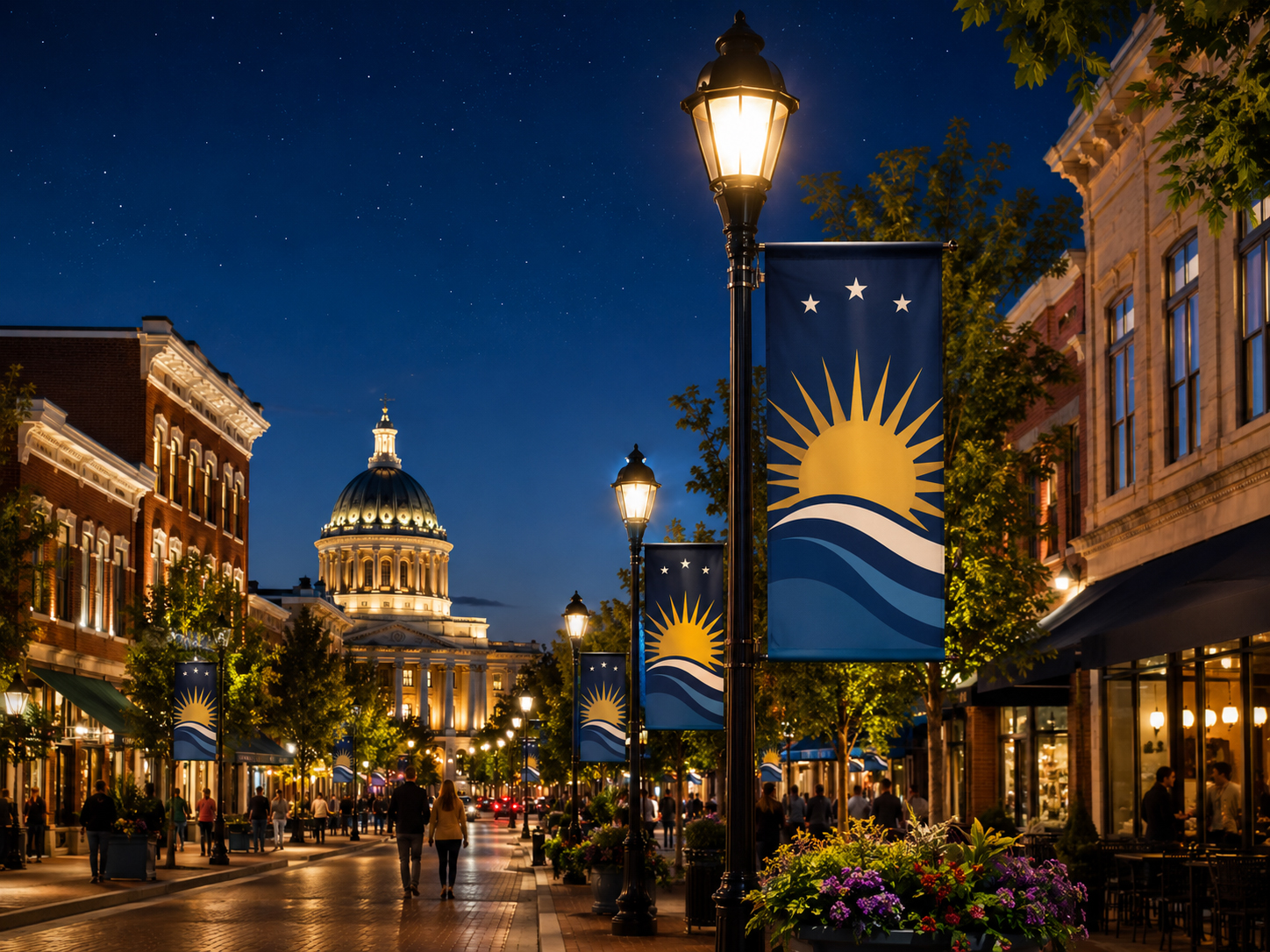
SolarFlag.com
If a flag is strong enough to carry a place, it should not disappear at sunset. Solar lighting keeps great flag design visible after dark.