Ensigns
Flags used to identify a ship’s nationality or official status.
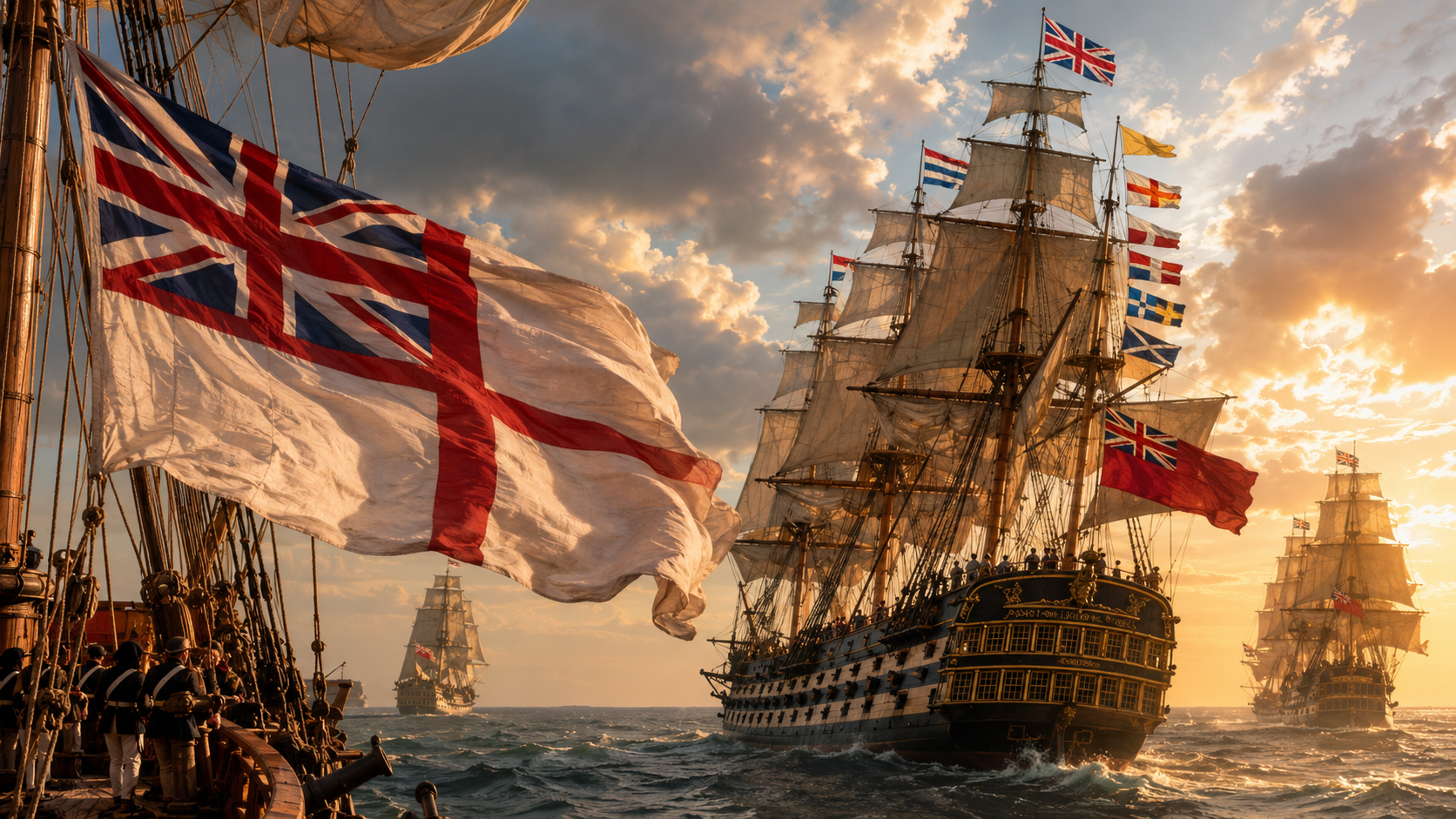
Naval flags identified ships, declared nationality, signaled command, warned of danger, marked rank, and helped vessels speak across water long before radio. On the sea, cloth could carry authority, identity, and urgent meaning.
Flags on the water
The sea made distance important. A ship on the horizon might be friend, enemy, merchant, navy, pirate, distress case, quarantine risk, or official vessel. Flags helped answer the first question: who are you?
Naval flags became a sophisticated visual system. Ensigns, jacks, pennants, signal flags, command flags, and ceremonial flags each carried a different kind of meaning.
The naval flag family
Naval flag culture grew because ships needed visual meaning at distance. A flag could identify nationality, command structure, status, destination, distress, quarantine, or ceremonial position.
Flags used to identify a ship’s nationality or official status.
Flags flown from a ship’s bow in specific naval or ceremonial circumstances.
Long, narrow flags often associated with command, commissioning, or identification.
Colorful code flags used to communicate letters, numbers, and urgent messages.
Flags that indicate admirals, command presence, or senior authority aboard ship.
Flags used for honors, visits, parades, dressing ship, and public display.
Visual command
A flag at sea had to work in wind, distance, glare, weather, and motion. It had to be bold enough to read quickly and meaningful enough to change what another ship did next.
That is why maritime flag design often uses strong contrast, simple shapes, repeated patterns, and vivid colors. Beauty and function met in the wind.
From sail to signal code
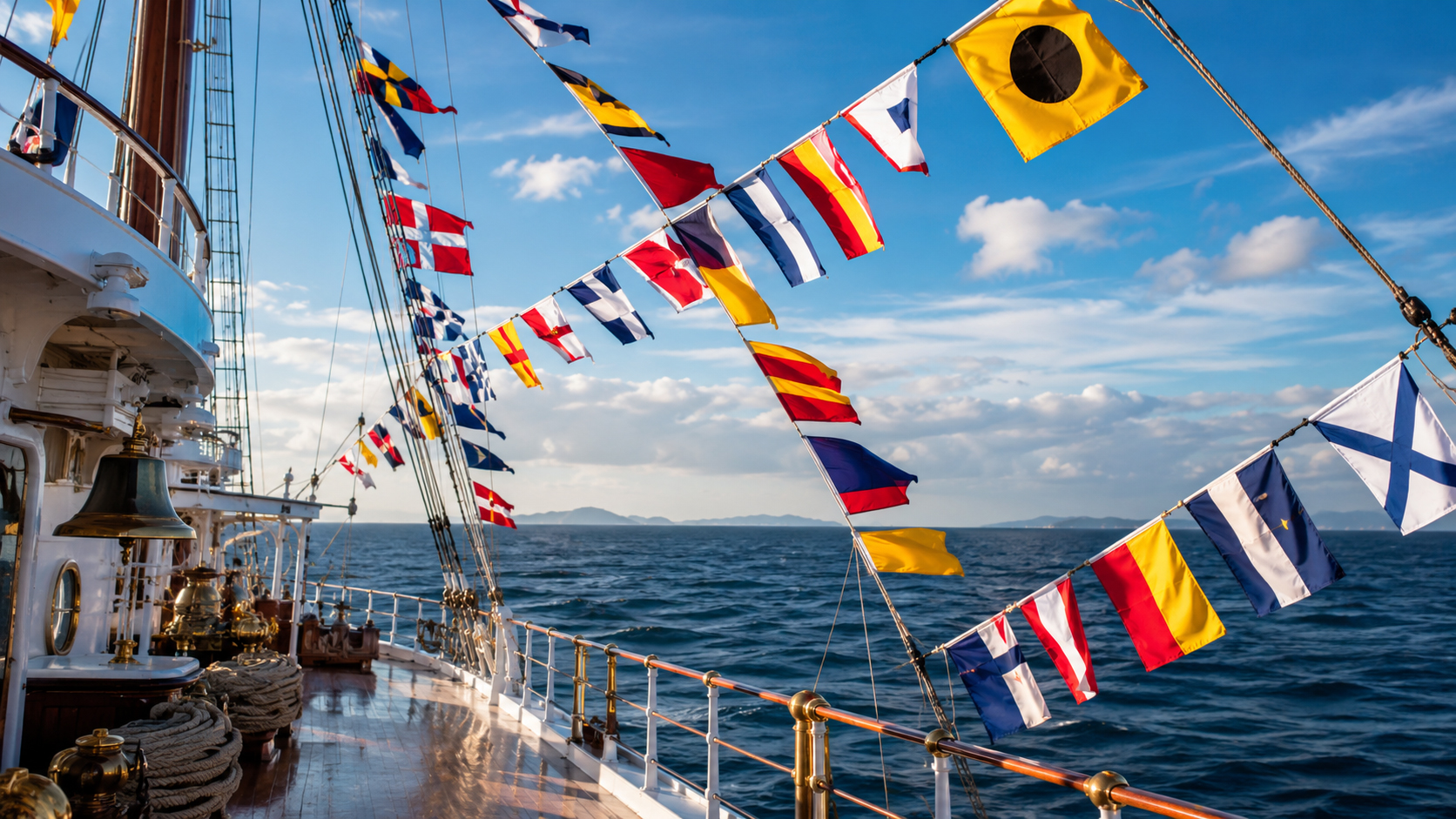
Naval and maritime signal systems made flags into a structured communication technology. Ships could display combinations of flags to send letters, numbers, identities, instructions, warnings, and distress messages across open water.
Navies and merchant fleets relied on visible signals to organize movement and identity at sea.
Flags helped show who commanded, where orders came from, and how ships should act together.
Signal flag systems allowed ships to communicate messages beyond simple identity.
Even with radio and satellites, flags still mark nationality, courtesy, status, ceremony, and tradition.
Whether on a ship or a flagpole, a flag is raised to be seen. At night, light keeps the symbol alive.
SolarFlag.com
Naval flags show the practical genius of flags: identity, command, warning, ceremony, and communication moving in the wind.