1
Declare a break
A new flag can visually separate a movement from an old monarchy, empire, regime, or order.

Revolutionary flags are born when old symbols no longer fit. They announce rebellion, independence, republics, liberation, protest, new identity, and the dangerous hope that a people can become something else.
Symbols of change
Revolutions are not only fought with speeches, pamphlets, barricades, armies, and assemblies. They are also fought visually. A new flag can make an idea look real before the world has agreed that it is real.
The revolutionary flag says: this movement has a face. This cause has a color. This group can gather, march, mourn, fight, and remember under one sign.
What revolutionary flags do
Some revolutionary flags become national flags. Others remain temporary, controversial, sacred, tragic, or forgotten. But in the moment, they help people see themselves as part of a shared historical force.
A new flag can visually separate a movement from an old monarchy, empire, regime, or order.
Different regions, classes, factions, or communities may rally under one visible sign.
A flag gives a movement a face that can appear on walls, ships, uniforms, crowds, and memory.
To opponents, a revolutionary flag can be a warning: the old symbols are being challenged.
After conflict, the flag may absorb the memory of those who suffered, fought, or died.
When revolutions succeed, their banners can become national flags, state symbols, or civic rituals.
Flag as announcement
A flag can make a political idea visible in one instant. It can fly above a crowd, a fort, a ship, a courthouse, a barricade, or a battlefield. It can make a cause seem larger than the people currently holding the pole.
That is why revolutionary flags can be so powerful and so dangerous. They make change visible before change is settled.
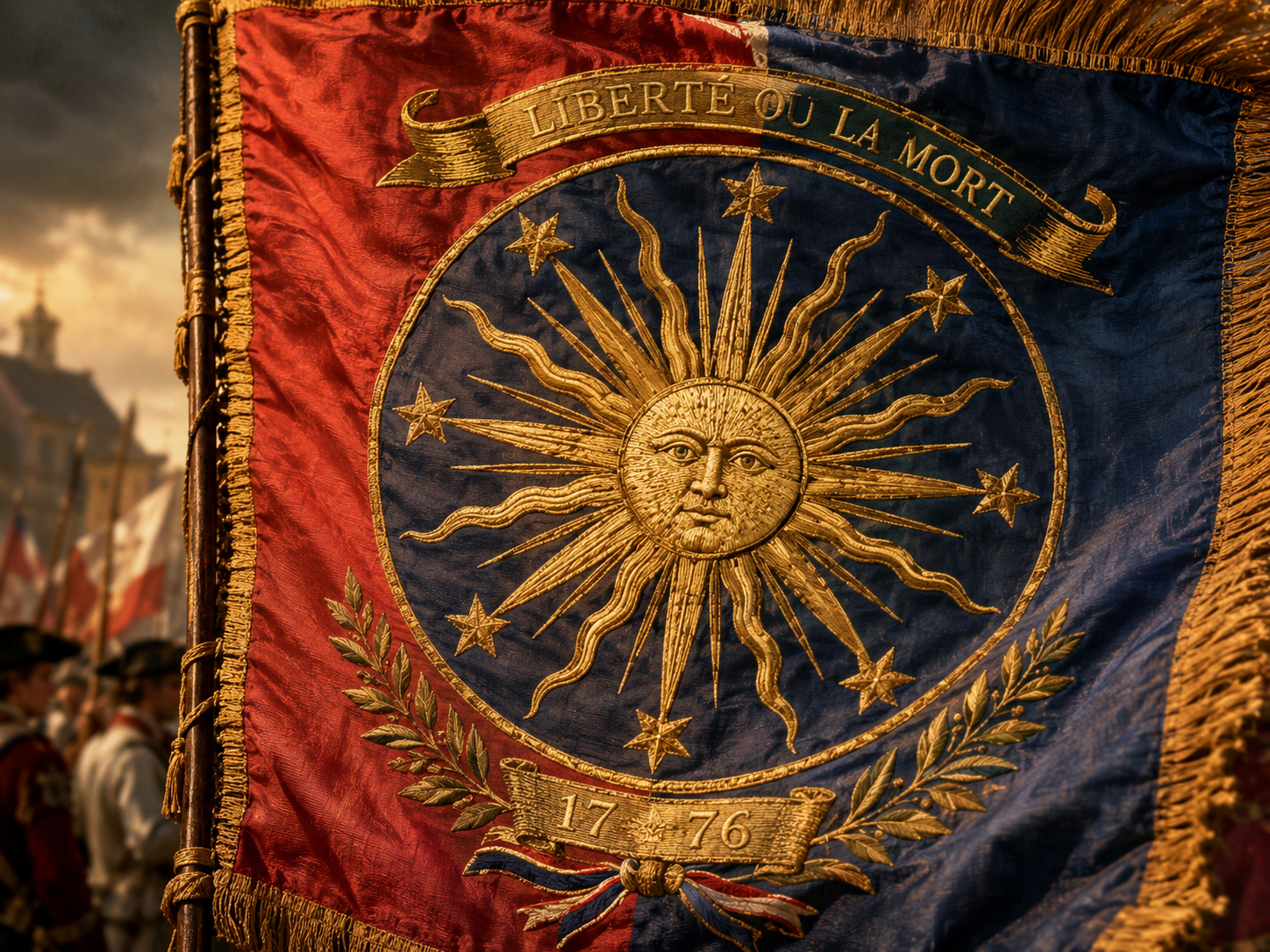
From rebellion to nation
The path from movement flag to national flag is never guaranteed. Some flags are replaced. Some are banned. Some become museum objects. Some become sacred. Some become the official symbol of the new country.
People stop seeing existing flags and emblems as representing their future.
Colors, slogans, patterns, and emblems give a cause visual unity.
Carrying the flag can become an act of courage, defiance, or public commitment.
If the movement succeeds, its flag can evolve into a national symbol.
Future generations inherit the symbol, sometimes forgetting how radical it once was.
SolarFlag.com
Revolutionary flags show the emotional power of cloth and color: they can announce a people before the world is ready to recognize them.