Recognition
Colors, shapes, and emblems helped people identify houses, armies, cities, and leaders.
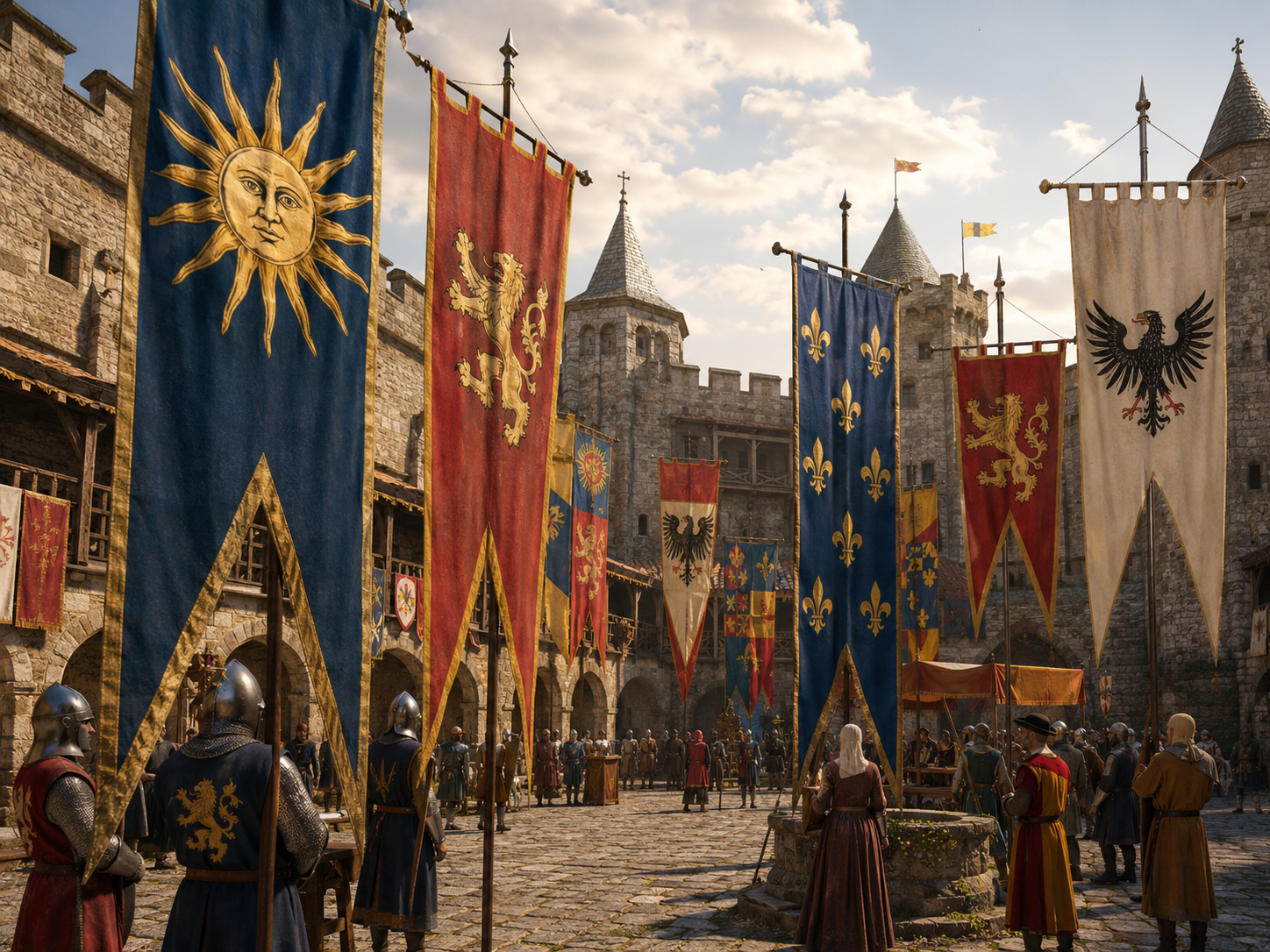
In the medieval world, banners, pennons, standards, and heraldic devices turned families, cities, armies, guilds, and rulers into vivid public symbols. Color, pattern, animal, cross, crown, and crest became a language of power.
Heraldry in motion
Medieval banners were not only decorations. They were practical symbols in a world where literacy was limited, travel was slow, and public identity had to be understood quickly from a distance.
A banner could identify a noble house, a city, a military force, a religious cause, a guild, a ship, or a ceremonial procession. The flag-like idea expanded: cloth became a portable public identity system.
What medieval banners did
Medieval visual language was rich because it had to do many jobs at once. A banner could be a sign of command, a family name, a battlefield marker, a religious emblem, a civic symbol, and a piece of ceremony.
The beauty of heraldry
Lions, eagles, fleurs-de-lis, crosses, stripes, checks, crowns, castles, keys, stars, suns, and mythical beasts helped make identity visible. The best symbols could be recognized quickly and remembered for generations.
Modern flag design still draws from that same medieval instinct: strong shapes, limited colors, bold symbols, and visual meaning that works from across a field, across a harbor, or across a public square.
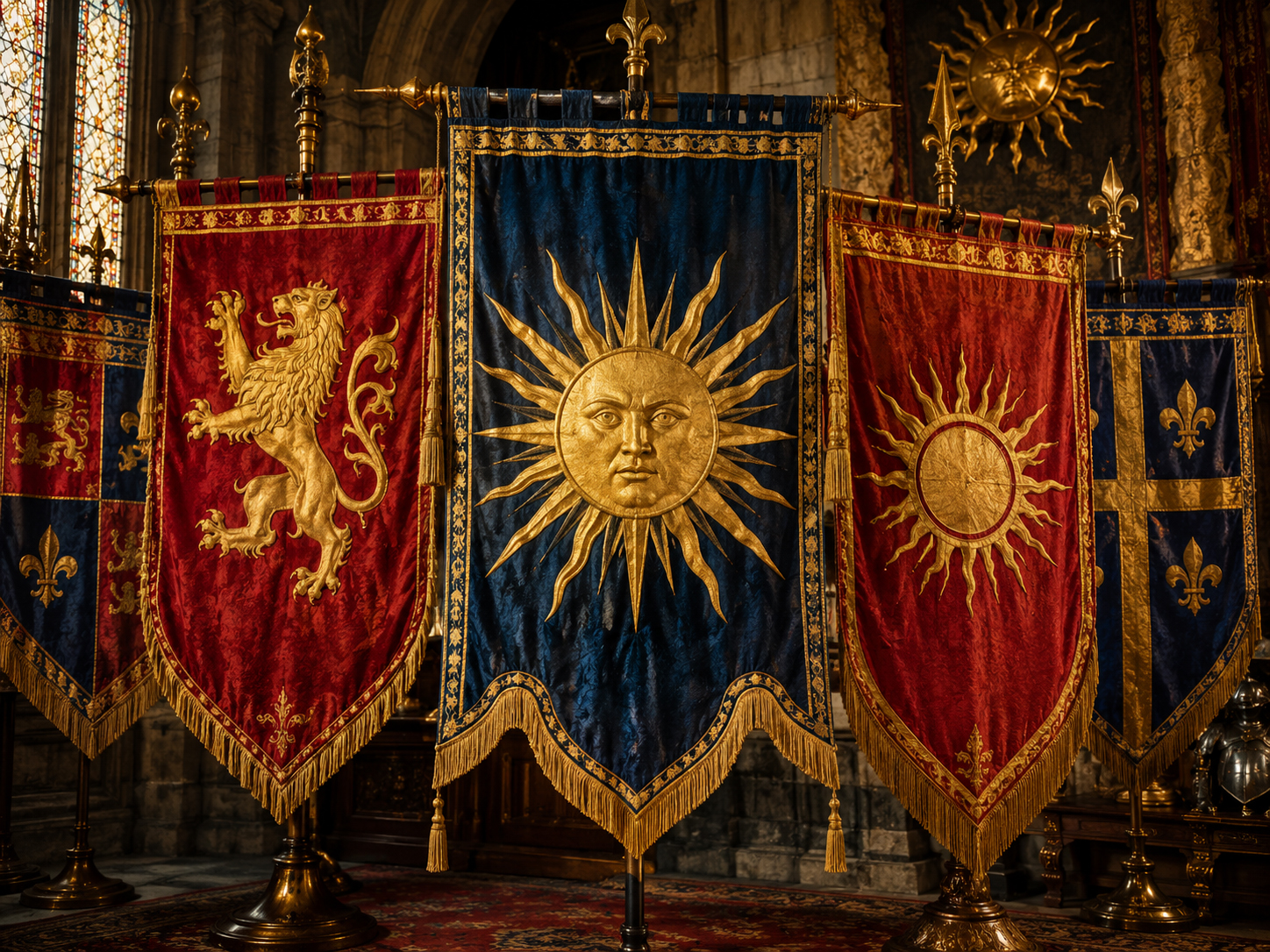
From banner to flag
Not every medieval banner became a national flag, but the visual habits of the period left a deep inheritance. Many modern flags still use crosses, stripes, heraldic animals, shields, crowns, castles, and colors with medieval roots.
Raised signs, standards, and early banners helped mark power, loyalty, and military identity.
Coats of arms, shields, colors, and animal symbols created a formal language of recognition.
Heraldic display turned identity into drama, pageantry, and memorable visual performance.
Towns, guilds, and institutions developed banners that expressed local pride and authority.
Many national, regional, civic, and military flags still echo medieval heraldic language.
SolarFlag.com
They were art, identity, command, ceremony, and public memory — all moving in the wind.