1
Unit identity
The vexillum helped mark a military group as a distinct body with its own visible sign.
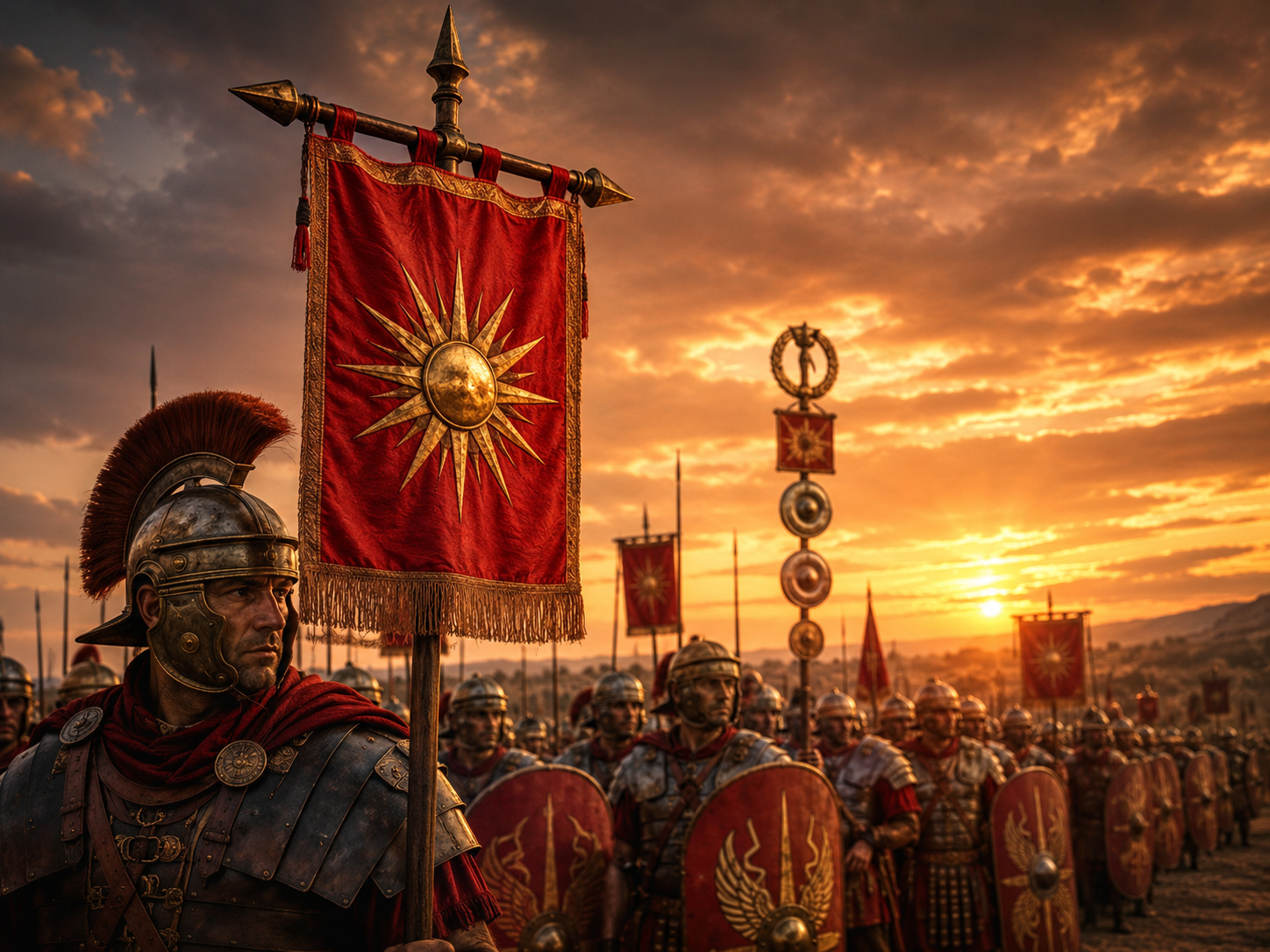
The Roman vexillum was a military standard — often a cloth banner suspended from a crossbar on a staff. It helped turn a unit into something seen, followed, defended, and remembered.
A standard with a name
The Roman vexillum was not a modern national flag, but it belongs in the family tree of flags. It was portable, visible, symbolic, and tied to a specific military identity. It helped soldiers recognize their unit and helped commanders project order across distance.
The word also matters. The study of flags is called vexillology, a modern term that echoes the Latin world of the vexillum. That makes the Roman standard more than an artifact. It is part of the vocabulary of flag history itself.
What it did
Standards solved a real problem: how do people move, fight, gather, and remember together when voices cannot carry far enough? A visible standard gave the group a point of focus.
The vexillum helped mark a military group as a distinct body with its own visible sign.
In movement or confusion, a raised standard gave soldiers a point of orientation.
A standard could become something to rally around, protect, and follow.
Standards were not only battlefield tools. They also appeared in formal public display.
Symbols carried forward the story of a unit, a victory, a loss, or a duty.
The idea of a portable public symbol continues in banners, flags, pennants, and ensigns.
Shape and symbol
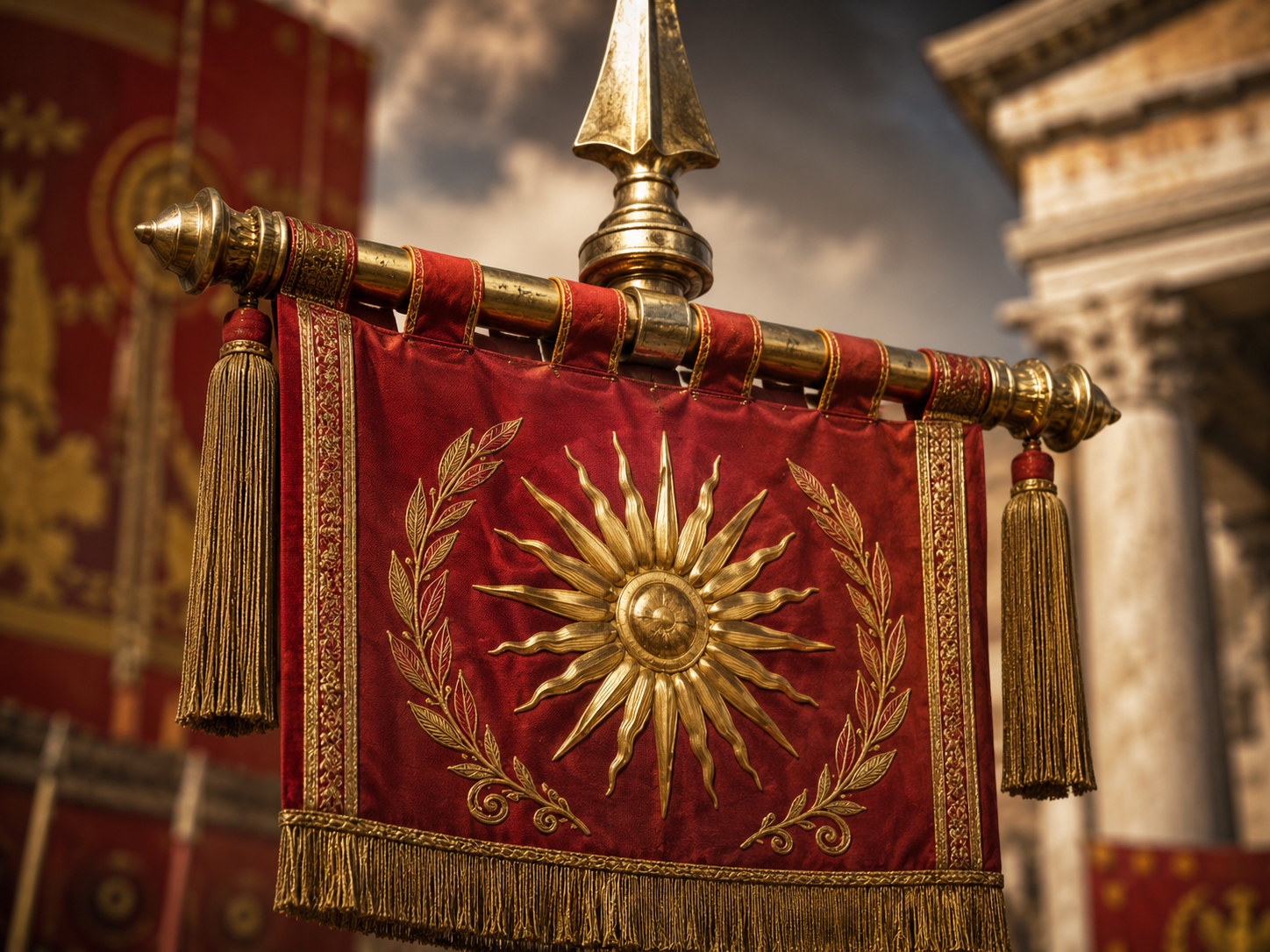
The vexillum’s power came from being recognizable. A cloth panel, a crossbar, a staff, a symbol, a color, and a group willing to follow it — that was enough to turn material into meaning.
Modern flags carry the same basic magic. They transform identity into something that can be raised, seen, saluted, protected, lit at night, and remembered.
From Rome to flag study
The Roman vexillum gives flag history a powerful linguistic echo. Modern flag study uses the word vexillology, and modern flag lovers are often called vexillophiles. The old standard remains hidden inside the modern vocabulary of flags.
A portable standard helped organize soldiers, communicate identity, and support command.
Military symbols moved beyond practical use and became part of ceremony, honor, and institutional memory.
Medieval banners, heraldic devices, and civic flags expanded the language of public identity.
National flags are different from Roman standards, but they still use raised symbols to create public identity.
From ancient standards to modern flagpoles, visibility remains central. If it flies at night, it deserves light.
SolarFlag.com
A raised symbol can organize people, carry memory, and make identity visible. That ancient truth still waves every time a flag rises into the light.